Reflection Summary
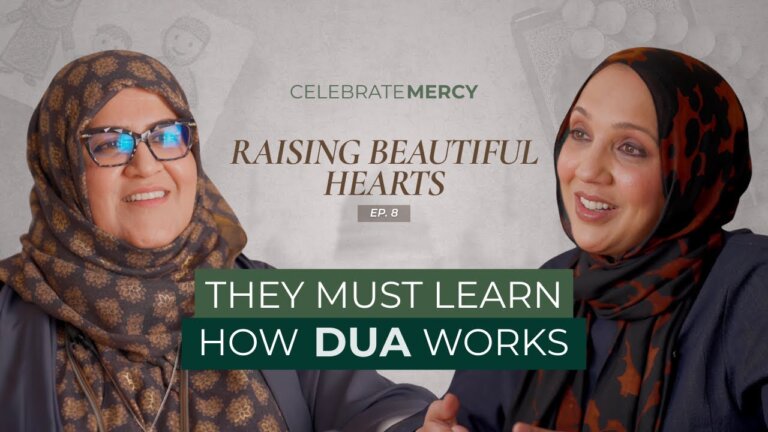
Featuring Ustadha Hina Khan-Mukhtar & Ustadha Hosai Mojaddidi
CelebrateMercy · Raising Beautiful Hearts Prophetic Parenting series · Episode 7
The Prophet ﷺ taught that we absorb what our friends carry, good or bad.
Friends are always drawing each other closer to Allah or further away.
Beyond usefulness and fun, the best friends inspire you to become better.
Not every classmate is a friend; true friends share your values.
Popularity and follower counts don’t measure the worth of a friendship.
Healthy vulnerability has limits; some things stay within the family.
The host opens with a simple instinct: when she sees a child with good adab, she assumes they have good character and hopes her children will befriend them. But parents can only curate their children’s friendships for so long. Eventually children choose for themselves, so what do they need to know?
Ustadha Hosai Mojaddidi turns to the Prophet’s ﷺ parable of the good friend and the bad friend: the perfume seller and the blacksmith. Children absorb whatever their friends give off. A popular saying holds that we become like the five people we spend the most time with. Friends who carry noble qualities help us acquire them, while friends who are fun and mischievous, who pull back the curtain on an alluring world, can expose children to ideas that eventually harm them. When children are young, parents can protect them by socializing with like-minded families who share their values; as children grow, simple parables like this one put them in the driver’s seat of their own choices.
The host’s mother used to say, “You are who your friends are.” Ustadha Hina Khan-Mukhtar’s mother said the same, adding, “Don’t assume you’re better than your friends,” because we tend to believe we aren’t being affected. Building on the hadith Ustadha Hosai mentioned, Ustadha Hina explains the image: from the perfume seller, at the very least you leave smelling good, and he may even gift you some perfume; from the blacksmith, you either burn your clothes on the coals or leave smelling of smoke. She taught her children that no friendship is ever neutral. In every relationship, one person is affecting the other, and together you are either drawing each other closer to Allah or further away. Friends can be at different places on the journey, so children shouldn’t be self-righteous or look down on others, but the direction should be the same.
She also shares Aristotle’s three types of friendship. The lowest is utility, meeting each other’s needs, like carpooling or sharing class notes. Next is friendship based on pleasure: enjoying the same hobbies or being on the same team. The highest is friendship based on virtue, where you admire who your friend is and they inspire you to be better and to draw closer to your Lord. She would ask her children, without criticizing the friend, “How do you feel about yourself after spending time with them?” Peers pull on one another, so the question is: where am I going, who am I going with, and are they helping me on the way?
The guests also point to the hadith of a man who told the Prophet ﷺ, “I love that man,” as a companion walked by. The Prophet ﷺ asked, “Have you told him?” and told him to go and tell him. It is a striking example because it involves men, and many boys today are taught that expressing feelings isn’t for them, which can later make it hard for them to communicate in their relationships. In Islam, love for the sake of Allah is a soul connection shown through dua, service, and wanting good for one another. Friendships built on popularity or personal gain, without that sincere love, deserve a second look.
Two of one guest’s sons attended public high school, and she taught them to tell the difference between an acquaintance and a friend. Not every classmate is a friend; you can enjoy people’s company, but true friends are those who share your values. The host adds that children today often measure success by how many friends or social media followers they have, which leaves many feeling inadequate. The reminder is quality over quantity: like the Prophet’s ﷺ companions, our friendships form concentric circles, some closer and some further out, but all should share values and love for the sake of Allah.
Finally, the host raises oversharing: some things belong within the family, especially as peers start to matter more. The guests describe a TED talk that pictured friendship as a pyramid built on positivity, vulnerability, and consistency. Vulnerability matters, but it has limits: children can share who they are and what they need, but it isn’t their job to expose other people’s problems, and we are meant to be a garment protecting our families. Many children think laying everything bare proves they’re a true friend, so parents need to teach those limits. And it goes both ways: the host admits her children have taught her to respect their privacy too, instead of sharing their stories with her own friends.
The Prophet ﷺ compared a good friend to a perfume seller and a bad friend to a blacksmith: from one you leave smelling sweet, from the other you leave smelling of smoke, or with burned clothes. Both guests’ mothers said, “You are who your friends are,” and warned against assuming we’re immune to our friends’ influence. When children are young, parents can shape their circles by spending time with like-minded families; as they grow, parables like this help them choose well themselves.
Tell your child the parable of the perfume seller and the blacksmith, and ask which one their friends are most like.
No friendship is neutral: one person is always affecting the other, drawing each other either closer to Allah or further away. Friends can be at different stages of their journey, so children shouldn’t be arrogant or self-righteous, but the shared direction matters. A gentle question helps children reflect without judging others: “How do you feel about yourself after spending time with this friend?”
After your child spends time with a friend, ask how they feel about themselves afterward, and just listen.
Aristotle described friendships of utility (meeting each other’s needs), pleasure (enjoying each other), and virtue (admiring and inspiring each other). Virtue-based friendship is the highest. The Prophet ﷺ encouraged a man who loved his companion to go and tell him, a reminder that sincere love between friends, including between boys and men, should be expressed. Love for the sake of Allah shows up as dua, service, and wanting good for one another, not popularity or personal gain.
Encourage your child to tell a good friend what they appreciate about them, or to make dua for them.
Children need to know the difference between classmates or acquaintances and true friends who share their values. In an age of follower counts, children can feel inadequate if they don’t have many friends. Like the Prophet’s ﷺ companions, friendships form circles, close and further out, and quality matters more than quantity. Vulnerability is part of friendship, but it has limits. Children can share who they are without exposing other people’s or their family’s private matters, and parents should respect their children’s privacy too.
Talk with your child about what’s okay to share with friends and what stays within the family, and ask what they’d like you to keep private too.
Share the Prophet’s ﷺ comparison of good and bad friends, and talk about it together.
After time with friends, ask how your child feels about themselves, without criticizing the friend.
Talk about friends of convenience, friends for fun, and friends who make you better, and which ones matter most.
Help older children see that not every classmate needs to be a close friend, and that true friends share their values.
Invite your child, boys included, to tell a good friend they care about them, or to make dua for them.
There are no right or wrong answers here, just space to think about your own family.
Who are my child’s closest friends, and are they more like the perfume seller or the blacksmith?
Do my child’s friendships help them grow closer to Allah, or pull them away?
Does my child know the difference between an acquaintance and a real friend?
Does my child measure their worth by how many friends or followers they have?
Do the boys in my family feel free to express love and appreciation for their friends?
Every family is different. If you’ve tried something that made a difference in your family, we’d love to hear about it.
More reflections that may help you think about this from another angle.