Digital Life

Helping you navigate the everyday challenges children face with screens, social media, gaming, YouTube and AI.

Practical help for this challenge

Clear, actionable guidance to help you decide what to do next.

  • Practical Guide

    Helping Kids Navigate AI Companions

    An AI companion can remember what a child has said, ask about their day, offer encouragement and respond whenever they want to talk. That can make an AI relationship feel surprisingly real. For parents, the goal doesn’t have to be convincing children that these interactions are meaningless. The more important lesson is helping children understand what AI companionship is, and what it cannot replace.

    AI & Technology · Online Safety

    Read guide →
  • Practical Guide

    Protecting Your Child’s Privacy When Using AI

    Talking to an AI chatbot can feel surprisingly private. A child types a question, the AI responds directly, and no other person appears to be involved. That feeling can make it easy to share things they wouldn’t normally post publicly: their name, school, worries, family situations, photographs or even someone else’s personal information. Children don’t need to understand every detail of how AI companies handle data, but they do need one important habit: before typing, uploading or sharing anything with AI, stop and think about whether it should leave their hands at all.

    AI & Technology · Digital Habits

    Read guide →
  • Practical Guide

    Helping Kids Spot AI Misinformation and Deepfakes

    A video shows a famous person saying something shocking. A photograph captures an event that seems unbelievable. A voice message sounds exactly like someone you know. It may be real, edited, or created with AI. As AI-generated images, video, audio and text become more convincing, children need a new digital habit: don’t decide whether something is true based only on how real it looks or sounds. The goal isn’t to make children distrust everything online. It’s to teach them when to pause, investigate and ask for help.

    AI & Technology · Digital Habits

    Read guide →
  • Practical Guide

    Using AI for Homework Without Letting It Do the Work

    AI can explain a difficult math concept, quiz your child before a test, help them brainstorm ideas and give feedback on their writing. It can also write the essay, solve the problem and hand them an answer before they’ve had a chance to think. For parents, the challenge isn’t simply deciding whether AI belongs in homework. It’s helping children learn how to use it without handing over the learning itself.

    AI & Technology · Digital Habits

    Read guide →
  • Practical Guide

    Creating Family Rules for AI Use

    AI is quickly becoming part of everyday life, from homework help and search to creative tools and chatbots. Instead of making decisions one app at a time, a few clear family rules can give your child a framework for using AI safely and thoughtfully. The goal isn’t to create a long list of restrictions. It’s to help your child understand when AI is useful, when to question it, and when they need to turn to a real person instead.

    AI & Technology · Digital Habits

    Read guide →
  • Practical Guide

    Teaching Kids to Use AI Without Letting It Do the Thinking for Them

    AI can help children brainstorm, explore ideas and understand difficult concepts, but it can also give them convincing answers that are wrong or do too much of the thinking for them. This guide helps you teach your child to use AI as a tool while protecting their curiosity, judgment and ability to think for themselves.

    AI & Technology · Digital Habits

    Read guide →
  • Practical Guide

    What Kids Should Not Share Online

    Between the ages of 6 and 12, children are often too young to understand what oversharing really means. This guide helps you explain what not to share online, and why it matters.

    Digital Habits · Online Safety

    Read guide →
  • Practical Guide

    Setting Up Device Safeguards at Home

    Children can stumble across websites and apps that are not safe for their age. This guide walks you through simple safeguards for computers, tablets, phones, YouTube and your home Wi-Fi, so you can create a safer online world for your child.

    Online Safety · Phones & Devices

    Read guide →
  • Practical Guide

    Gaming Safely

    Online gaming can be creative, social and fun, but multiplayer games can also introduce children to strangers, inappropriate conversations and other risks. This guide offers practical ways to make gaming safer without treating gaming itself as the enemy.

    Gaming · Online Safety

    Read guide →
  • Practical Guide

    Setting Healthy Gaming Limits Without Constant Battles

    “Five more minutes.” “I can’t quit right now!” “Everyone else gets to play longer.” For many families, the hardest part of gaming isn’t the game itself. It’s deciding when gaming happens, how long it lasts and what happens when it’s time to stop. A few predictable family expectations can reduce conflict while helping children learn how to enjoy gaming without letting it crowd out the rest of life.

    Gaming · Screen Time

    Read guide →
  • Practical Guide

    Helping Kids Stop Gaming Without a Meltdown

    The game ends, and suddenly your child is furious. They’re yelling, arguing, crying or pleading for one more match. For some children, stopping a highly engaging game can be genuinely difficult. That doesn’t mean you have to give in, and it doesn’t mean every strong reaction signals a serious problem. The goal is to help your child learn an important skill: something I really enjoy can end, and I can handle the transition.

    Emotional Regulation · Gaming

    Read guide →
  • Practical Guide

    Don’t Make Gaming the Villain

    When gaming becomes a source of family conflict, it’s easy for the game itself to become the enemy. But to your child, gaming may be much more than staring at a screen. It might be where they spend time with friends, master difficult skills, build elaborate worlds, compete, create, laugh or simply unwind. You don’t have to love gaming, or allow unlimited access to it, to take your child’s interest seriously. Understanding what your child gets from gaming may even make it easier to set healthier boundaries around it.

    Gaming · Parent-Child Connection

    Read guide →
  • Practical Guide

    Online Gaming, Voice Chat, and Who Your Child Plays With

    Your child may be sitting at home with a controller and headset, but gaming can put them in a room with people from almost anywhere. That doesn’t mean parents have to accept open communication with strangers as part of gaming. For younger children especially, parents can often restrict who can communicate with them, limit play to approved friends, and use the parental controls provided by the platform or game. As children grow, those protections can be paired with teaching them to make good decisions on their own. The goal isn’t maximum access or maximum restriction. It’s giving children the level of independence they’re ready to handle.

    Gaming · Online Safety

    Read guide →
  • Practical Guide

    In-Game Purchases, Loot Boxes, and the Pressure to Spend

    Many games no longer make money only when someone buys the game. Children may encounter virtual currencies, character skins, battle passes, limited-time offers and loot boxes while they’re already playing. None of that means every in-game purchase is bad, but children benefit from understanding that the game isn’t only giving them things to play. It may also be giving them reasons to spend.

    Gaming · Responsibility

    Read guide →
  • Practical Guide

    When Gaming Starts Taking Over

    Your child loves gaming. Maybe they talk about it constantly, race through homework so they can play, or complain when it’s time to stop. Does that mean there’s a problem? Not necessarily. Instead of asking only “How many hours is my child gaming?” step back and ask a bigger question: “What is gaming doing to the rest of my child’s life?”

    Gaming · Screen Time

    Read guide →
  • Practical Guide

    Choosing Video Games That Are Right for Your Child

    “Everyone at school plays it.” “But it’s only rated Teen.” “My friends’ parents let them.” A rating on a box doesn’t tell you everything you want to know. Instead of asking only what a game is rated, look at the whole experience your child is entering.

    Gaming

    Read guide →

Guidance for this challenge

Thoughtful guidance, expert perspectives, and practical reflections to help you better understand what your child may be experiencing.

Digital LifeEarly Childhood – Teen · 48 min

Kids Need Less: Here’s Why

48 min · Do our children really need more, or less? In this conversation with Lauren Booth, educator and children’s author Anisa Rasul shares…

Read the Reflection →
Digital LifeMiddle Childhood – Teen · 8 min

Before You Give Your Child a Phone, Watch This

” In Episode 5 of Raising Beautiful Hearts, Ustadha Hina Khan-Mukhtar and Ustadha Hosai Mojaddidi explain why a child’s developing brain needs parents to…

Read the Reflection →
Digital LifeEarly Childhood – Preteen · 19 min

How to Say No to Your Kids and Get Them to Listen

19 min · Saying no is part of loving your child, but how do you set limits without becoming harsh, or giving in to…

Read the Reflection →
Digital LifeEarly Childhood – Teen · 32 min

The Quranic Way to Escape the Age of Distraction

32 min · Shaykh Hamza Yusuf unpacks Surah al-Asr — just three verses, but so central that Imam Ash-Shafi’i reportedly said it alone would…

Read the Reflection →
Digital LifeEarly Childhood – Teen · 14 min

The Simple Solution to Phone Addiction

14 min · Delivered as a khutbah, Ustadh Hisham Abu Yusuf’s talk names the smartphone as one of the biggest barriers between believers and…

Read the Reflection →
Digital LifeEarly Childhood – Teen · 56 min

The Brain Expert: How to Raise Mentally Resilient Children

56 min · In this wide-ranging interview, psychiatrist Dr. Daniel Amen lays out the framework behind his book Raising Mentally Strong Kids: get clear…

Read the Reflection →
Digital LifeEarly Childhood – Teen · 30 min

How to Raise Righteous Muslim Children in the West

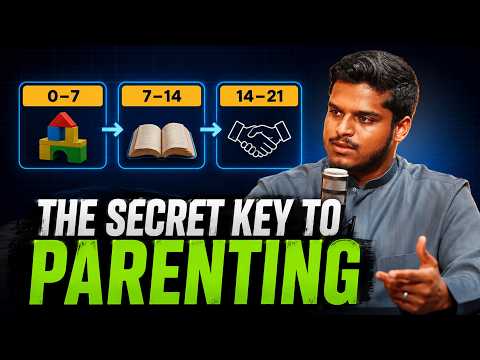
30 min · Hisham Abu Yusuf structures his talk around a saying he attributes to Ali ibn Abi Talib: play with children for seven…

Read the Reflection →

What Worked for Other Parents

Sometimes the most useful idea comes from another parent who has been through something similar.

No parent stories here yet

As parents share what has helped their families, their experiences will appear here. Clear filters

Go Deeper

Looking for something more in-depth? Explore books, talks, courses, and other longer-form resources on parenting, family life, faith, and raising children.

Explore Go Deeper →

Has something worked in your family?

It doesn't have to be a perfect solution. If something helped — even a little — another parent may benefit from hearing about it.

Share What Worked →