Reflection Summary
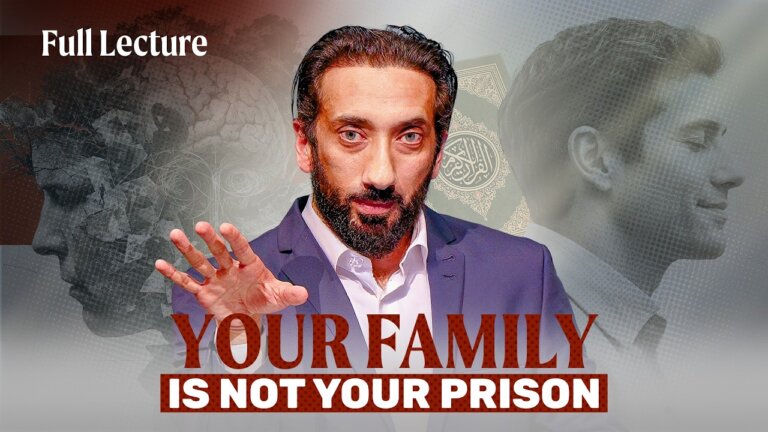
Nouman Ali Khan
Ustadh Nouman explains that gratitude isn’t about denying that something was painful — it’s about training your mind to notice the relief that came after, and how far you’ve come since, instead of staying fixed on what went wrong.
After generations of slavery and mistreatment, Bani Israel find themselves free but stranded in the desert with nothing. Musa’s instruction to them, in that exact moment, is to remember Allah’s favor.
The lecture points out that the word used for their ordeal, ‘bala,’ can mean both trial and blessing — the same hardship, reframed as something that also carried a gift.
Allah’s promise, as Ustadh Nouman explains it, is open-ended: show even a small amount of genuine gratitude, and Allah promises increase—not only, he says, in provision, but potentially in character and capability as well.
The lecture is direct that having problems isn’t unusual — everyone does. What differs is whether the mind defaults to complaint or can be trained toward gratitude.
Even after Bani Israel are physically safe, the lecture describes a second kind of ‘darkness’ still to leave behind: an ungrateful, complaint-focused mindset.
Ustadh Nouman opens with the story of Musa (peace be upon him) and Bani Israel just after they cross the sea to freedom. Generations of slavery and humiliation are behind them, but they now stand in the middle of a desert with no food, no shelter, and no plan. In that exact moment, he says, Allah instructs Musa to tell his people to ‘remember the favor’ of Allah on them. It’s a moment ripe for complaint rather than gratitude, and he leans into that tension: how can gratitude possibly make sense here?
He introduces the Arabic word ‘bala,’ used for what Bani Israel went through, which can mean both trial and blessing, and argues this double meaning is deliberate. The years of oppression were real and painful, but the fact that they are now over is itself something to notice and be grateful for. He contrasts this with a pattern he sees in some approaches to processing pain: staying focused on reliving what happened, rather than also registering how far a person has already come.
From there, he turns to Allah’s promise: show even the smallest amount of gratitude, and it will be met with increase — not only in provision, he says, but in character and capability. He’s careful to note that this gratitude isn’t a vague ‘alhamdulillah’ tacked onto a list of complaints; it has to be specific and genuine, something a person can actually name.
He closes by describing gratitude as a discipline rather than a default. Complaint, he argues, takes no effort; noticing what’s going well takes real, deliberate attention. The lecture ends by reframing ‘leaving darkness for light’ as something that continues even after outward circumstances improve — the ongoing work, he says, of leaving an ungrateful mindset behind.
Ustadh Nouman begins with Bani Israel, newly free but stranded in the desert after generations of slavery. In that moment of real hardship, Musa is instructed to tell them to ‘remember the favor’ of Allah rather than dwell on what they had endured. The lecture is careful to say this isn’t about pretending the suffering wasn’t real. It’s about where the mind rests afterward: on the wound, or on the relief that came after, and how far you’ve come since. He compares this to a pattern he sees in some approaches to processing pain, where a person can stay fixed on reliving what happened rather than also registering how far they’ve come.
Notice, the next time you think back on a hard season, whether your mind settles on what went wrong or can also rest on how far you’ve come since.
The lecture highlights the Arabic word ‘bala,’ used for what Bani Israel went through, which can mean both trial and blessing. Ustadh Nouman reads this as a reminder that even after a severe trial, being brought through it and no longer living under it can itself become something to be grateful for. He draws a comparison to Yusuf (peace be upon him), who describes his own unjust imprisonment not by detailing the injustice, but by naming the favor of coming from a particular family line. The point isn’t to force positivity onto pain, but to notice that surviving something difficult is itself worth acknowledging.
Think of one difficult chapter in your life and consider what you can now be grateful for in having come through it or no longer being where you once were.
Ustadh Nouman argues that complaint is the natural, low-effort default for most people — it takes no work to notice what’s wrong. Noticing what’s going well, he says, takes real and deliberate attention. He frames Allah’s promise, that even a small, genuine act of gratitude is met with increase, as tied to this effort rather than to easy positivity. The lecture warns against gratitude that’s just ‘alhamdulillah’ added to the end of a complaint, calling instead for something specific and real.
Try naming one specific, genuine thing you’re grateful for today — not everything, just one thing you can actually point to.
Instead of a general ‘alhamdulillah,’ try naming one specific thing you’re grateful for today — something you could point to and explain.
The next time you think back on a hard season, notice whether your mind settles on what went wrong, or whether it can also rest on how far you’ve come.
When you tell your children about a hard time in your life, try including how things got better, not only what was difficult.
Notice how much of what you read or watch each day is complaint or criticism, and how much points you toward something to appreciate.
Ask each person at dinner to name one specific, real thing from their day — not a generic answer — that they’re grateful for.
Parents carry their own history forward — the hard years, the moments that still sting, the version of love or its absence they grew up with. Ustadh Nouman’s reflection on Bani Israel is really about where the mind rests after a hard season: on the wound, or also on the relief that came after, and how far you’ve come since.
Consider a difficult chapter from your own life, or from parenting itself. When you think back on it, does your mind stay fixed on what went wrong, or can it also notice how far you’ve come? This isn’t about pretending something wasn’t hard — it’s about where your attention lives now.
Faith can hold both truths at once: that something was genuinely painful, and that gratitude for what came after can reshape how we carry it. Practicing this ourselves may be one of the quiet ways our children learn it too.
There are no right or wrong answers here, just space to think about your own family.
When my child triggers a strong reaction in me, how much of that reaction belongs to what’s happening now — and how much might be connected to experiences or expectations I carry with me?
Is there a difficult chapter in my life where I can now recognize something to be grateful for in having come through it?
How much of what I consume each day, online or otherwise, points me toward complaint rather than gratitude?
What is one specific thing, not a general one, that I’m grateful for today?
What might my children be learning about gratitude simply from watching how I respond to hard days?
Every family is different. If you’ve tried something that made a difference in your family, we’d love to hear about it.
More reflections that may help you think about this from another angle.