Reflection Summary
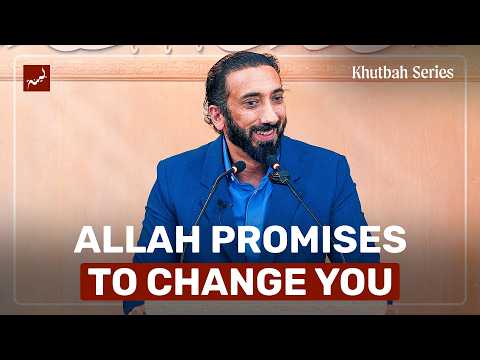
Ustadh Nouman Ali Khan
The lecture contrasts a psychological tradition that assumes people start broken with a Quranic view that people start pure (fitrah) and are shaped, for better or worse, by what happens afterward.
Ibrahim faced a father who wanted him dead; Nuh spent centuries being ignored, even by his own family; Ayyub endured prolonged illness; Maryam faced the terror of public humiliation — the Quran doesn’t minimize any of it.
Ustadh Khan explains karb as a heavy burden that never seems to break; he describes ghumma as an emotional numbness that blocks even joy from getting through — both, he says, are described in the Quran as real, and as removable.
In several of these stories, the deepest pain comes from a parent, spouse, or sibling — a pattern the lecture says is still common today, and still painful to name.
Speaking an uncomfortable truth, as in Ibrahim’s case, can cost real safety and comfort — the lecture argues faithfulness doesn’t mean an absence of hardship, only that the hardship isn’t the end of the story.
Every human relationship in these stories, with a parent, spouse, child, or even one’s own body, is shown as unstable in some way; only the relationship with Allah is presented as steady enough to build recovery on.
Ustadh Khan draws a sharp contrast between what he characterizes as foundational assumptions within Western psychology and the Quran’s starting point on human nature. In developing that contrast, he connects Freudian psychology with what he sees as a parallel idea in Christian teachings about human brokenness: that human beings start out broken, whether by original sin or by early trauma, and spend their lives working to undo it. He contrasts this with a hadith describing every child as born on a pure, natural disposition (fitrah), with hardship and dysfunction arriving later rather than being a person’s starting condition. He is careful to say this is not a rejection of therapy or counseling, but an argument that the frameworks people use to understand pain matter, and that a genuinely Quranic psychology, distinct from simply layering Islam onto Western categories, is worth developing.
He introduces two Arabic words to describe emotional pain: karb, a heavy burden that settles in and does not break, like the reinforced base of a palm frond or a knot that never slips; and ghumma, a kind of emotional numbness or blockage that prevents someone from feeling joy even in a joyful moment. He then walks through a series of prophets, showing that each experienced real, severe versions of this pain: Ibrahim faced a father who wanted him dead and a society that isolated him for being good rather than for being rebellious; Nuh spent centuries being ignored, including by his own wife and son; Ayyub endured prolonged illness that reached a point where he had to describe it directly to Allah; Yunus experienced anger, and then deep regret and shame, after walking away from his people; and Maryam faced the specific terror of public humiliation while giving birth alone.
A recurring thread is that the deepest pain in these stories often comes from family, not from outside enemies, a pattern the lecture connects directly to what many people experience today. It also notes that even the two prophets described as having real worldly power, Dawud and Sulaiman, faced their own version of stress: surrounded by people whose loyalty they could not fully trust. And it makes a pointed observation about Ibrahim’s later test with Ismail: that obeying Allah, in this case telling the truth or following a difficult command, does not guarantee comfort or safety, and can in fact lead directly into hardship.
The lecture’s turning point is that in each of these stories, Allah is shown removing the karb or the ghumma, not just from the prophets, but, as the Quran states plainly regarding Yunus, from “believers” in general. The argument is that every other relationship in these stories, with a parent, spouse, child, or even one’s own body, is shown as unstable and capable of breaking, while the relationship with Allah is presented as the one steady foundation recovery can be built on. It closes with practical guidance: that some difficult relationships in a person’s life cannot simply be escaped, and the real task is building enough emotional toughness and clear boundaries that those relationships stop controlling one’s emotional state, rather than waiting for the relationship itself to change.
The lecture contrasts a psychological framework built around the self and a premise of starting ‘broken,’ which it traces partly to Freud and to Christian doctrine, with a hadith describing every child as born on a pure natural disposition (fitrah). It argues that where a framework says pain originates changes how healing is understood, one looking inward to the self, the other pointing outward to a person’s relationship with Allah. This isn’t presented as a rejection of therapy or professional support, but as a call to develop a distinctly Quranic understanding of emotion rather than simply relabeling Western categories with Islamic terms. Ustadh Khan introduces two Arabic words for real emotional weight: karb, a burden that settles in and doesn’t break, and ghumma, a numbness that blocks even joy from getting through.
Notice, the next time you’re processing a hard emotion, whether you instinctively look only inward for the source and the fix, or whether you also turn outward, toward Allah, as part of working through it.
Ibrahim faced a father who called him a disappointment and was ultimately willing to see him harmed, alongside a whole society that isolated him for refusing to go along with them. Nuh spent centuries delivering the same message to generation after generation, including his own wife and son, without being heard, a pattern the lecture connects to real modern experiences of trying and failing to reach a loved one. Ayyub’s illness became severe enough that he directly told Allah ‘harm has touched me,’ described in the lecture as reaching a genuinely critical point rather than a minor complaint. Maryam’s story highlights a specific, often overlooked fear: not death itself, but public humiliation, described as one of the most extreme forms of psychological pain a person can face. In several of these stories, family members, not outside enemies, caused the deepest pain, a pattern the lecture says is still common and still hard for people to name today.
If you’re carrying pain that came from within your own family, notice that this is named directly and without minimizing in these stories — it’s a recognized form of real hardship, not something to feel strange or alone in.
After Yunus’s anger, regret, and shame, the Quran describes Allah removing his ghumma, and then states this rescue extends to ‘believers’ generally, not to prophets alone. The lecture’s central claim is that every other relationship in these stories, with a parent, spouse, child, sibling, or even one’s own body, is shown as unstable, while a relationship with Allah is presented as the one steady foundation to build recovery on. Ustadh Khan directly rejects the idea that a person, or their difficult relative, is permanently and unchangeably ‘broken’ or ‘toxic,’ pointing to Allah’s instruction to Musa to speak gently to Firaun as evidence that even someone who calls himself a god is not written off as unreachable. Practical guidance closes the lecture: some painful relationships can’t be escaped, so the real task is building enough emotional toughness and clear boundaries that those relationships stop controlling a person’s emotional state.
Think of one relationship in your life that remains part of it, and consider whether one clear, appropriate boundary could help it stop controlling how you feel. Serious abuse or safety concerns may call for professional or other trusted support instead.
If you’ve been carrying a heavy feeling that doesn’t seem to lift, put a name to it this week rather than pushing it aside — karb, the Quran’s word for it, doesn’t mean you’re broken, just that you’re carrying something real.
Next time you’re processing a hard emotion, try beginning with a moment of turning to Allah, before or alongside working through the feeling on your own.
Share one story this week, Ibrahim’s difficult father, Ayyub’s illness, Yunus’s regret, to show your children that faith and real hardship aren’t in tension.
For a difficult relationship that remains part of your life, consider whether one clear, appropriate boundary could reduce how much the conflict controls your emotional state. Serious abuse or safety concerns may require professional or other trusted support rather than simply stronger personal boundaries.
Notice if you’ve mentally written someone off as permanently ‘toxic’ or unreachable, and consider whether there’s still room, as with Firaun in the Quran, for a gentler approach.
There are no right or wrong answers here, just space to think about your own family.
When I’m going through something painful, do I instinctively look only inward for answers, or do I also turn to Allah as part of working through it?
Is there a burden (karb) I’ve been carrying for a long time without naming it or bringing it to Allah directly?
Have I ever experienced my deepest hurt from within my own family rather than from an outsider? How did I make sense of that?
Is there a relationship in my life I can’t walk away from, where I need better boundaries rather than a hope that the other person will simply change?
Have I ever permanently labeled someone, a family member, myself, as ‘broken’ or ‘toxic’ in a way that closes the door on change?
Every family is different. If you’ve tried something that made a difference in your family, we’d love to hear about it.
More reflections that may help you think about this from another angle.