Reflection Summary
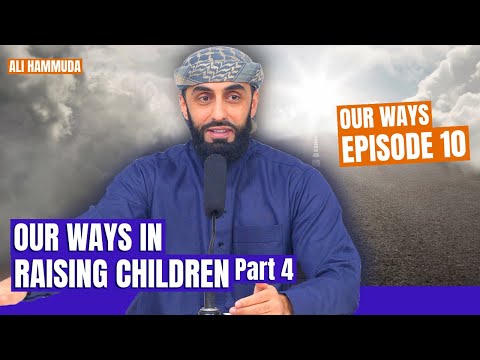
Sheikh Ali Hammuda
Sheikh Ali reminds listeners of the hadith that everyone responsible for others will be asked about them, including about their household. He presents raising righteous children as one of the most worthwhile uses of a parent’s time, since children carry a parent’s good work forward after the parent has died.
He says raising children starts when choosing a spouse. He encourages looking for religion and character, and a shared vision for the family, while still being attracted to the person.
Sheikh Ali calls a parent’s own taqwa and repentance the greatest protection for children, pointing to the Quran’s account of two orphans whose treasure was kept safe because their father was righteous. He urges parents to model what they hope their children will become.
He cites a supplication taught before conception and points to Quranic duas for children. He encourages parents to pray for their own children and for other people’s children too.
He says the adhan is called in a newborn’s ear so that the first thing the child hears is that Allah is the greatest, followed by the call to prayer and success.
He says a name with a noble meaning encourages a child to live up to it. He urges parents to know what a name means before choosing it, and cites hadith guidance on names the Prophet ﷺ loved, discouraged and changed.
Sheikh Ali Hammuda opens this episode of his series “Our Ways” by moving from our ways with parents to what logically follows: children. He frames raising righteous, capable children as a serious responsibility rather than an optional extra, reminding listeners of the hadith that every person responsible for others will be asked about them, including about their own household. He adds that children carry a parent’s good work forward after the parent has died. Many things compete for children’s attention today, he says, such as social media, anime, music and cultural change, and he argues that the greatest protection of all is parents who know how to raise them well. Some parents answer that guidance is in Allah’s hands. Sheikh Ali agrees that it is, but says Allah has also given parents agency, and he points to Prophet Nuh, who kept calling to his son until the last moment, as an example of not giving up.
He then offers six steps as a sample of the protection the Shariah places around children, and invites listeners to compare themselves against them. The first starts before marriage, with choosing a spouse. Raising children does not begin at puberty or at the first difficult conversation, he says, but when a person decides what to look for in a husband or wife. He cites the Prophet’s ﷺ advice to marry someone whose religion and character satisfy you, and the hadith that people marry for wealth, lineage, beauty or religion, with its encouragement to choose religion. This does not mean attraction is unimportant, he says, only that it should not dazzle a person into losing sight of the family they hope to build. He warns against hurried marriages made to repair earlier mistakes, saying children are rarely part of that thinking, and urges listeners to know what they want from a marriage before asking what questions to ask. A shared vision, he argues, can still carry a family forward if one parent is lost or absent, and he gives historical examples of mothers who raised notable figures after their husbands died or were away.
The second step is to be righteous yourself. Sheikh Ali tells parents not to expect children to avoid what they themselves do, and he calls a parent’s taqwa, repentance and fear of Allah in private and in public the greatest form of insurance for a child’s future, by Allah’s permission. He points to the Quran’s account of the wall repaired for two orphans, whose buried treasure was kept safe because their father had been righteous, and quotes a scholar who draws from it that a righteous person is protected in respect of his children. He suggests parents intend their own worship and self-restraint as protection for their children too, and mentions a scholar of the early generations who lengthened his prayer thinking of his son. He adds that the source of a family’s income matters, saying that haram earnings disturb a household’s ability to raise righteous children.
The third and fourth steps are about dua. Before conception, Sheikh Ali cites a hadith, which he places in Bukhari and Muslim, in which the Prophet ﷺ taught a supplication asking Allah to keep Shaytan away from the couple and from any child He grants them, with the report that Shaytan will not harm that child. He notes that many parents have never heard of it. He then says, without having researched it, that the Quran’s duas seem to be most often about children, and recalls the pledge of a woman for the child in her womb, a prophet’s request for good offspring, and another prophet’s request for his own offspring when told he would be a leader for humanity. He encourages dua for children during prostration, while drinking zamzam, when breaking the fast and while walking to the masjid. He also tells of a simple father whose sons stood out for their religion and character and who said his one habit was to pray for other Muslims’ children whenever he prayed for his own. Sheikh Ali links this to the hadith that an angel says the same for the person who prays for his brother in his absence.
The last two steps come at birth. Sheikh Ali says the adhan is called in a newborn’s ear so that the child’s first words heard are that Allah is the greatest, followed by the testimony of faith and the call to prayer and to success, which he describes as a definition of success based on devotion to Allah rather than wealth or status. Then comes the name. Citing an Arabic saying that everything has a share of its name, he argues that a name of nobility and virtue encourages a child to live by those traits, and he urges parents to know what a name means before they choose it. He cites hadith guidance to name children after the prophets, names the Prophet ﷺ loved and disliked, and names he discouraged, such as ones meaning success or wealth, because telling a caller that success or wealth is not here sounds like a bad omen. He adds that the Prophet ﷺ changed names with troubling or self-praising meanings. He closes by asking listeners to measure their own attention to these steps and to make amendments where needed.
Sheikh Ali says the work of raising children starts before pregnancy, when a person chooses a spouse, rather than at puberty or the first crisis. He encourages looking for religion and character, as the hadith advises, without ignoring attraction, and being clear about the kind of family you hope to build. He says a shared vision between parents can still benefit children if one parent is lost to death or absence, and points to historical examples of mothers who raised notable figures. He cautions against hasty marriages made to repair earlier mistakes, saying children are rarely considered in those decisions.
Think about what vision for your children you and the people raising them with you already share, and whether you have ever put it into words together.
Sheikh Ali says parents should not expect their children to avoid what they themselves do, and should model what they hope the child becomes. He calls a parent’s taqwa, repentance and fear of Allah the greatest protection for children, by Allah’s permission. He points to the Quran’s account of the two orphans and their buried treasure, and to a scholar’s reading that a righteous person’s children are protected because of him. He encourages parents to intend their fasting, night prayer, modesty and restraint as protection for their children as well.
Consider one habit of your own that you would be glad for your children to inherit.
Sheikh Ali cites a supplication taught before conception, and says many parents have never heard of it. He says that, as far as he can tell without having researched it, the Quran’s duas are most often about children, and recalls examples of parents asking Allah for righteous offspring. He encourages parents to pray for their children in ordinary moments, such as prostration, breaking the fast or walking to the masjid. He also encourages praying for other people’s children, linking it to the hadith that an angel says the same for the one who prays for his brother in his absence.
Choose one ordinary moment in your day when you could pray for your children by name.
If you are raising children with a spouse or co-parent, set aside time to talk about what you each hope for your children’s faith and character. Sheikh Ali says a shared vision matters well before and after children arrive.
Pick one act of worship or one trait you want your children to see in you, and work on it this month. Sheikh Ali urges parents to embody what they want their children to become.
Attach a short dua for your children to a moment you already have, such as prostration, breaking your fast or walking to the masjid, and include other people’s children too.
If you are expecting a child or planning to have one, look up the supplication Sheikh Ali mentions in a reliable source, so you have the wording from the hadith itself.
When choosing a name, learn its meaning first and consider what it would mean for a child to grow into it. Sheikh Ali cites the Prophet’s ﷺ guidance on names.
There are no right or wrong answers here, just space to think about your own family.
What do I hope my children’s faith and character will look like, and who shares that hope with me?
What do my children see me do, in private and in public, that I would be glad for them to copy?
When do I already make dua, and how could it include my children and other people’s children?
What does doing what I can look like for me right now, without waiting until everything is in place?
If my child grew into the meaning of their name, what would I hope that says about them?
Every family is different. If you’ve tried something that made a difference in your family, we’d love to hear about it.
More reflections that may help you think about this from another angle.