Reflection Summary
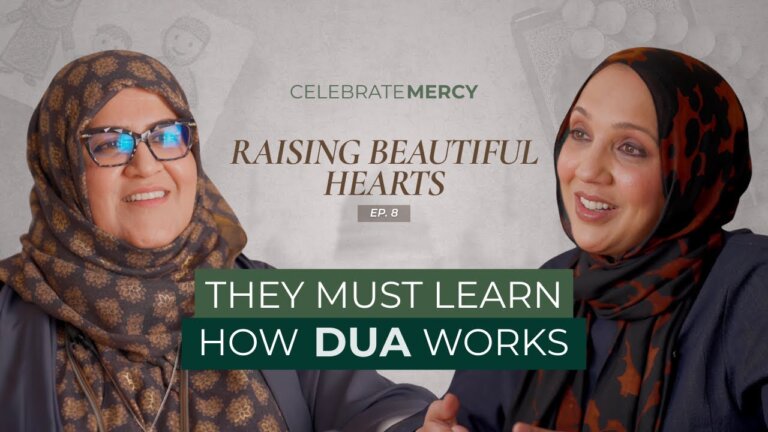
Dr. Haifaa Younis
A single mother’s clear conviction about the value of knowledge shaped one of history’s greatest Islamic scholars — and it started with what she herself believed, not just what she pushed.
She only pushed her son toward religious knowledge because she deeply understood its value — not out of habit or convention.
She moved to Mecca specifically because it was a center of Islamic learning, showing how much a family’s surroundings shape a child.
Dr. Haifaa recounts that he memorized the Quran with understanding by age seven and, by thirteen, had advanced deeply in Quranic study and memorized a major work associated with Imam Malik.
Dr. Haifaa recounts a report that his mother encouraged him to give charity whenever he returned to Makkah, tying generosity to a specific habit and place.
Make the masjid and its scholars a regular part of your child’s life, and tie specific values to places they already visit.
Imam Ash-Shafi’i founded one of the four major schools of Sunni Islamic law, followed today across large parts of Egypt, the Levant, and beyond. He was the first scholar to systematize the principles of Islamic jurisprudence, a scholar of Quranic commentary and hadith, and, by another scholar’s account, someone the world needed “like the sun” and “like health.” In recounting his life, Dr. Haifaa highlights not only Imam Ash-Shafi’i’s extraordinary scholarship, but the role she says his mother played in shaping the person he became.
His mother was an Arab woman, God-conscious and knowledgeable, and above all, in Dr. Haifaa’s telling, someone who understood the real value of knowledge before she ever pushed her son toward it. That distinction matters: plenty of parents push a child toward medicine or law simply because society values those paths, without necessarily holding that conviction themselves. She pushed her son toward the deen because she had actually weighed its worth, in this life and the next.
Widowed when her son was two, she moved him to Mecca — his father’s hometown, and a center of Islamic learning — and focused his early years there. Dr. Haifaa recounts that he memorized the Quran with understanding by age seven and, by thirteen, had advanced deeply in Quranic study and memorized a major work associated with Imam Malik. At fifteen or sixteen, she sent him to Medina, where Dr. Haifaa says he remained for nine years, devoting himself to study under Imam Malik.
What stands out just as much as the academic path is what she taught alongside it. Dr. Haifaa recounts a report that his mother encouraged him to give charity whenever he returned to Makkah, turning generosity into a repeated practice rather than an abstract virtue. Dr. Haifaa connects this to the hadith about every child being born upon the fitrah, and then broadens the point to the influence of parents and environment, and to a well-known Arabic saying that a daughter inevitably resembles her mother.
The application she draws out for today’s parents is direct: make the masjid a regular part of a child’s life rather than an occasional stop, and seek out real relationships with knowledgeable people in the community rather than letting screens fill that space by default. She closes with a question worth sitting with — this scholar’s mother is remembered, across centuries, simply as “the mother of Imam Ash-Shafi’i.” What, she asks, will our own children’s lives eventually say about us?
She pushed her son toward knowledge of the deen specifically because she understood its value — not because it was expected of her. This is contrasted with parents who steer a child toward a career mainly because society rewards it, without a real conviction behind the push. That inner conviction, more than the pushing itself, is what shaped how she raised him.
Before you push your child toward something, be sure it’s rooted in a value you genuinely hold, not just habit or social expectation.
After being widowed, she deliberately moved to Mecca, a center of Islamic learning, rather than staying wherever was simplest. Dr. Haifaa recounts that he memorized the Quran with understanding by age seven and, by thirteen, had advanced deeply in Quranic study and memorized a major work associated with Imam Malik, shaped directly by the scholars around him. The talk draws a parallel to a child raised in a different country than their family’s origin, absorbing the culture of wherever they actually grow up.
Who and what surrounds your child day to day is doing as much shaping as anything you directly teach them.
Dr. Haifaa recounts a report that his mother encouraged him to give charity whenever he returned to Makkah, turning generosity into a habit tied to a specific place and moment. The scholars this upbringing produced were remembered as righteous, not just knowledgeable — a distinction the talk is explicit about. Dr. Haifaa cites the hadith about every child being born upon the fitrah, and broadens the point to the influence of parents and environment.
Pair every push toward knowledge with a deliberate habit that builds character, not just information.
Bring your child to the masjid consistently, not only for special occasions, so it becomes a familiar, connected place rather than an occasional one.
Look for a teacher or mentor in your community your child can spend real time with, the way Imam Ash-Shafi’i’s mother sought out scholars for him.
Pick one value — charity, gratitude, dua — and attach it to somewhere you already go regularly, the way she tied charity to every visit.
When teaching Quran, pair memorization with explanation of what it means, not recitation alone.
Before pushing your child toward a subject or path, ask yourself honestly whether you value it yourself, or are just following what’s expected.
There are no right or wrong answers here, just space to think about your own family.
Is there something you push your child toward mainly because it’s expected, rather than because you personally value it?
What does your child’s everyday environment — the people, places, and habits around them — actually teach them, separate from what you tell them?
Is there a value like generosity, honesty, or gratitude you could tie to a place or moment your child already visits regularly?
How connected is your child to knowledgeable, trustworthy adults in your community outside your immediate family?
If people someday described you as “the mother” or “the father of” your child, what would you want that to say about their character?
Every family is different. If you’ve tried something that made a difference in your family, we’d love to hear about it.
More reflections that may help you think about this from another angle.