Reflection Summary
Imam Tom Facchine
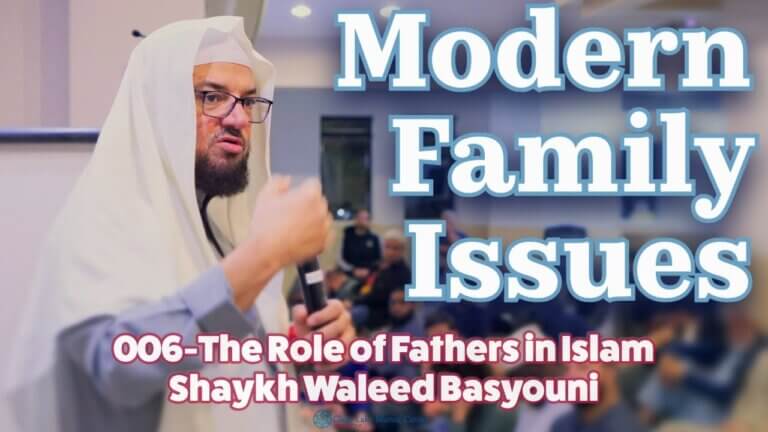
Imam Tom describes life as a series of roles and says that knowing which stage you are in gives life purpose. In the framework he proposes, a man moves from a young man in training, to a father, to an elder, and this talk focuses on the stage of the father.
He says being a father comes through marriage and children, and describes both as relationships that draw responsibility and self-improvement out of a person. He points to a saying of the Prophet ﷺ that marriage is half of one’s faith.
Imam Tom reads the story of Musa as an arc from a young man caught up in tribal loyalty to a protective father, and sees in it the courage, nobility, and self-sacrifice he associates with fatherhood.
He describes protection as both physical and spiritual, and speaks of the sacrifices fathers make to provide. He says that abusing one’s children is prohibited in Islam, since a father is meant to protect them.
He says every privilege has a corresponding duty, and argues that authority should be used justly and for the worldly and spiritual good of those under it.
Imam Tom names the smartphone as one obstacle, and points to a living connection with Allah, mentors, peers, and trusted friends one can be vulnerable with as sources of support.
Imam Tom Facchine opens by saying that fatherhood is an essential thing to understand, especially in a time when, he believes, the dominant culture downplays the importance of fathers. He says Islam contradicts that view, and he notes that each of us carries an inheritance from a father and a mother that most of us hope to improve on for our own children. He grounds the talk in the Islamic teaching that humanity is created as male and female, which he says is meant to invite reflection, and he suggests that having to depend on and negotiate with someone different from ourselves is part of how people grow morally.
From there, Imam Tom offers a way of seeing life as a series of stages. Drawing on a podcast idea about women moving from maiden to mother to matriarch, he proposes a parallel for men: a young man in training, a father, and an elder. He says a sense of purpose comes from knowing your role and where you are on that path. Becoming a father, he says, comes through marriage and children rather than through simply identifying as one. He describes marriage as a relationship with accountability built in, because a spouse knows your strengths and shortcomings in a way no one else does, and he points to a saying of the Prophet ﷺ that marriage is half of one’s faith. Having a child, he adds, brings a level of responsibility that changes a person.
Imam Tom reads the story of Musa as a picture of this kind of growth. He describes a young man who at first sides with his own tribe, who later steps in to protect two vulnerable women without asking for anything in return, and who eventually, as a husband and father, tells his family to stay put while he goes to investigate a distant fire in the dark. In his reading, the responsibilities of fatherhood both require and draw out virtues such as truthfulness, trustworthiness, sacrifice, patience, and protection. He speaks of protection as both physical and spiritual, pointing to a verse about protecting oneself and one’s family from the Fire and to Ibrahim’s father as a father who failed on both counts. He says abuse of children by a parent is prohibited in Islam. On authority, he discusses a verse about men’s degree of responsibility toward women, which he says most scholars connect to strength and financial provision, and he argues that authority without fulfilling those duties is not what Islam intends. Every privilege, he says, comes with a corresponding duty, and power is meant to be used justly.
Imam Tom then turns to balance and obstacles. He cautions fathers against providing only materially at the expense of their children’s religious education and practice. He describes a culture he believes is hostile to men and suspicious of male authority, and he calls the smartphone one of the greatest obstacles, saying it can pull a father’s attention away from his wife and from a child who is trying to connect. As support, he points to a real, active connection with Allah, to mentors, peers, and younger people who look up to us, and to friends with whom men can be vulnerable without being punished for it. He closes with an image he attributes to Martin Lings: a boy who inherits his father’s oversized robes should be allowed to grow into them rather than have them cut down. For Imam Tom, this is a matter of morality, and he says that when everyone fulfills their position in a moral way, justice will follow.
Imam Tom Facchine says Islam treats fatherhood as essential, and that each of us carries an inheritance from our parents that we hope to improve on for our own children. He offers a framework of life stages, modeled on a podcast idea he mentions, in which a man moves from a young man in training, to a father, to an elder. He says knowing your role and your stage is part of what makes life feel purposeful. In his telling, being a father comes through marriage and children, and cannot be claimed simply by identifying as one. He describes marriage as a relationship with accountability built in, since a spouse knows your strengths and weaknesses in a way others in the community do not. He says that becoming responsible for a child changes a person deeply.
You might notice which responsibilities in your own life have changed you the most, and what they have drawn out of you.
Imam Tom describes protection as both physical and spiritual, pointing to a verse about protecting oneself and one’s family from the Fire. He points to Ibrahim’s father as an example of a father who failed on both counts, since he made idols and threatened to stone his own son. He says that abusing one’s children is prohibited in Islam because a father is meant to protect them. On provision, he speaks of sacrifice, such as fathers who go to hard and thankless jobs to support their families. He discusses a verse about men’s degree of responsibility toward women, which he says most scholars connect with physical strength and financial provision, and he argues that authority without fulfilling those duties is not what Islam asks for. He says every privilege has a corresponding duty, and that authority should be used justly, citing the Prophet’s ﷺ mention of the just ruler among those who will have shade on the Day of Judgment.
Notice whether your efforts to protect and provide leave space for the quieter parts of parenting, such as listening and being available.
Imam Tom warns fathers against focusing only on material provision at the expense of their children’s religious education and practice. He says spouses and children can be a test when concern for them crowds out one’s obligations to Allah, and that a father needs to find balance. He calls the smartphone one of the greatest obstacles for fathers, saying it can pull attention away from wives and children, including a child who is trying to connect with a parent looking at a screen. He notes that people are paid to capture attention, and encourages men to take care with what they look at, even involving a spouse or trusted friend if needed. He says a father needs an active connection with Allah, as well as mentors, peers, and younger people who look up to him. He adds that men also need people they trust enough to be vulnerable with, without being punished for it.
You might consider who could be a trusted sounding board about parenting, and one small habit that would help you be more present when your child talks to you.
Inspired by Imam Tom’s reading of Musa’s story, take a few quiet minutes to think of one responsibility in your family life and a quality it has brought out in you.
Imam Tom describes a child trying to connect with a parent who is looking at a screen. You might set aside a short daily window, such as the first few minutes after school or dinner, when your phone is put away.
Imam Tom says everyone benefits from mentors, peers, and people they can mentor. Consider reaching out to one trusted person about how parenting is going, whether someone a step ahead of you or a peer.
In response to Imam Tom’s caution about providing only materially, consider one small, unforced way to include faith in family life this week, such as praying together or sharing something you’re learning.
Parenthood asks a great deal of us, but one of the quieter ideas in this reflection is that those demands can also shape us. Responsibility, sacrifice, patience, trustworthiness, and courage are not only qualities we hope to teach our children. They are qualities we may be asked to practice more deeply because we have children.
It can be useful, then, to ask not only, “What kind of person am I trying to raise?” but also, “What kind of person is parenting asking me to become?” The difficult parts of family life may sometimes reveal places where there is still room for us to grow.
There are no right or wrong answers here, just space to think about your own family.
Which responsibilities in my life have changed me most, and what have they drawn out of me that I did not know was there?
When my child is trying to connect with me, what tends to pull my attention away, and what would help me be more available?
Who around me could I be honest with about how parenting is really going, and who might benefit from what I have learned so far?
How do I want to balance what I provide materially with what I hope to pass on to my children in faith and character?
Every family is different. If you’ve tried something that made a difference in your family, we’d love to hear about it.
More reflections that may help you think about this from another angle.