Reflection Summary
Ustadha Hosai Mojaddidi
The Prophet ﷺ taught that gentleness adorns whatever it touches.
Understanding your natural tendencies shows how far you are from the Prophet’s ﷺ balance.
“I am who I am” isn’t our tradition; we keep growing toward his example.
A student labeled a troublemaker was hiding severe abuse at home.
Trust, competence, and identity each bring their own struggles.
Keep making dua and reaching out, and be gentle with yourself when you’ve made mistakes.
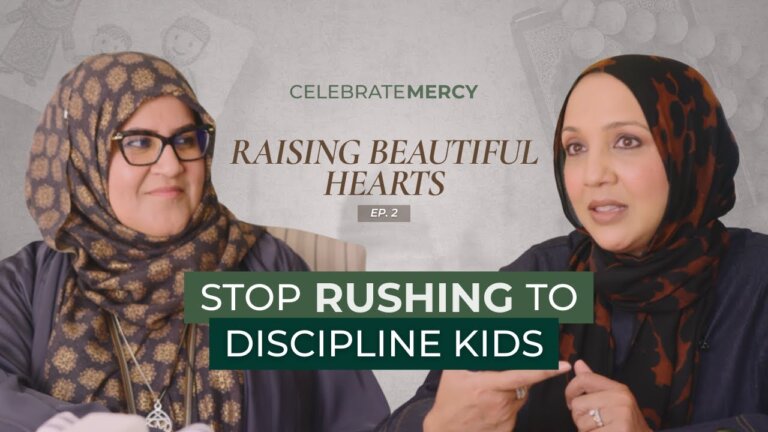
In this talk for parents and teachers, Ustadha Hosai reflects on the Prophetic teaching that gentleness beautifies everything it touches, and that those who are gentle, easy, and approachable are promised protection from the Fire. She encourages listeners to make the intention to become that kind of person.
But what does it mean to be gentle? She connects it to the Islamic study of temperament (mizaj). Just as we inherit physical traits, we inherit tendencies in our personalities. The point of understanding our temperament isn’t to label ourselves, but to see our strengths and weaknesses, and how far we are from the balanced character of the Prophet ﷺ, whose temperament was perfectly balanced. If you tend to react emotionally, blurting things out before thinking, that is a sign of work to do. The Prophet ﷺ had immense self-restraint: he paused, considered the best response, and modeled it. That kind of presence comes from being aware that Allah is always watching, whether someone cuts us off on the freeway or a family member irritates us.
Our tradition doesn’t accept “I am who I am, take it or leave it.” We are works in progress, fallible but never without hope, always turning back to the Prophet’s ﷺ example. Gentleness, she explains, is a whole way of being: approachable, kind, compassionate, welcoming, someone people are glad to see. She contrasts this with much of today’s celebrity and social media culture, which often celebrates arrogance and self-importance. No one carried more worry than the Prophet ﷺ, yet he was the gentlest and most loving of people. Children, the poor, and people of every background felt seen, heard, and valued with him, because he didn’t burden others with what was in his own heart.
She shares a story from her early teaching career at an Islamic school. A seventh- or eighth-grade boy arrived from public school already labeled a troublemaker: guarded, harsh-mannered, unwilling to listen. Other teachers told her not to bother. But remembering that the Prophet ﷺ never gave up on anyone, she chose a gentle approach: no rebuking, no shaming, no sending him to the office. When he didn’t want to participate, she let him be, while he still benefited from being among his classmates. One day, as he was the last to leave, she noticed tears in his eyes. She simply told him, sincerely, “You are such a good boy.” For the first time, he opened up: he was being severely abused at home. He didn’t trust adults because none had protected him; they had only labeled him the problem. A gentle, non-judgmental approach allowed him to finally be heard.
That’s why she urges anyone working with children to learn about child development. She recommends Erik Erikson’s stages of psychosocial development: young children are working out trust; school-age children are building competence and can easily feel inferior; teenagers are forming their identity amid many confusing messages. “My way or the highway” parenting, with yelling and ultimatums, is, she says, the least effective approach. She also cites the teaching attributed to Sayyiduna Ali that the first seven years of childhood are for play.
She recalls another painful encounter: a 13-year-old girl who approached her after a large event and described years of severe abuse tied to her Quran recitation, and who was now struggling with self-harm and thoughts of not wanting to live. Stories like these, and women in study circles who quietly mention they don’t want to go home, remind her that we never know what someone is going through. So don’t judge by appearances, make no assumptions, focus on bettering yourself, and be a person of ease.
Finally, she speaks to parents whose relationships with their children have broken down because they weren’t present or made mistakes. Her message: don’t give up. Your children are an amanah as long as you live. Turn to Allah in dua, acknowledge your mistakes, give gifts, reach out in different ways, and involve others who may help. And be gentle with yourself too. Ustadha Hosai emphasizes sincere tawbah, acknowledging our mistakes and asking Allah for forgiveness, while warning against arrogance, heedlessness, hopelessness, and despair. Don’t let despair convince you it’s too late.
A note from ValueOurKids: if you are concerned that a child is being abused or is at risk of harming themselves, please contact your local child protection services, emergency services, or a crisis helpline. Reaching out can save a life.
Just as we inherit physical traits, we inherit tendencies in temperament. Knowing yours reveals your strengths and where you need growth. If you tend to react emotionally, that shows the gap between you and the Prophet ﷺ, who paused and chose the best response. Awareness that Allah is always watching helps us stay present and composed with everyone, including our own families.
Notice one situation this week where you react quickly, and practice pausing before you respond.
Gentleness means being approachable, kind, and welcoming, someone others are glad to see. Much of today’s culture celebrates arrogance, but the Prophet ﷺ, despite carrying the greatest burdens, made everyone feel seen and valued. Our tradition calls us to see ourselves as works in progress, not “take it or leave it.”
When your child walks in, stop what you’re doing, smile, and greet them warmly.
A student labeled a troublemaker was, underneath, a child suffering abuse who had learned not to trust adults. By refusing to shame or give up on him, Ustadha Hosai eventually created the safety he needed to speak. We never know what a child, or anyone, is going through. Be a person of ease, and make no assumptions.
Think of a child who frustrates you, and ask what might be going on beneath the behavior.
Ustadha Hosai points to Erikson’s stages as one useful framework for understanding children’s development: young children are working through trust, school-age children through competence, and teenagers through identity. Yelling and ultimatums rarely help. Parents with strained relationships should keep knocking on the door: through dua, admitting mistakes, gifts, and reaching out. Be gentle with yourself too. Sincere repentance opens the door to hope, not despair.
If a relationship with your child is strained, make dua for them today and take one small step to reconnect.
When your child pushes your buttons, take a breath and ask how the Prophet ﷺ would respond.
Make your face light up when your children come home, whatever kind of day you’ve had.
When a child acts out, get curious: “What might you be going through?”
Read a short overview of child development for your child’s current age.
If a relationship is strained, make regular dua for your child and reach out in small, gentle ways.
There are no right or wrong answers here, just space to think about your own family.
What is my natural temperament, and how does it show up when I’m stressed with my children?
Are people, especially my family, happy to see me walk into a room?
Is there a child I have labeled as “difficult” without asking what they might be going through?
How do I usually react when my child doesn’t cooperate: gentleness, or ultimatums?
What stage of development is my child in, and what are they struggling with?
Every family is different. If you’ve tried something that made a difference in your family, we’d love to hear about it.
More reflections that may help you think about this from another angle.