Reflection Summary
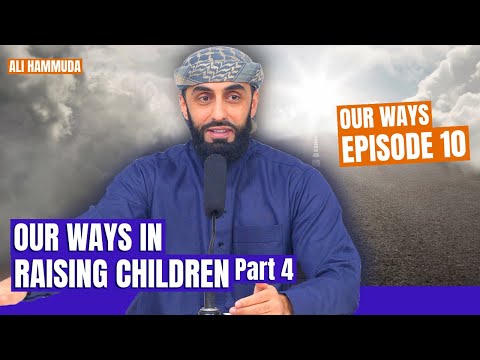
Sheikh Ali Hammuda
Sheikh Ali lists violence as the seventh habit to avoid, pointing to the Prophet’s ﷺ gentleness with children and his words to a man who boasted of never kissing his ten children. He says research associates early physical harm with later mental-health difficulties.
He says parents who grew up elsewhere need to accept that their children live differently, so some old methods and expectations no longer fit. He suggests being willing to lose some small battles in order to protect what matters most.
He says children are naturally curious and should be given reasons and demonstrations, not only commands, pointing to how the Prophet ﷺ showed a boy how to skin an animal and explained to young Hasan why he could not eat a date. He distinguishes compliance from respect.
He argues that doing everything for children can weaken their initiative and sense of duty. He suggests handing them age-appropriate tasks and allowing small failures along the way.
He says children benefit from seeing love and respect between their parents. When conflict happens, he says, it helps them to see parents apologize and make up.
He says a parent who neglects themselves may burn out and become short-tempered, and encourages making time for enjoyable activities, citing the Prophet’s ﷺ saying that your body has a right over you.
Sheikh Ali Hammuda continues his series “Our Ways” by recalling the first six habits he has said wear down a child’s dignity: shouting, blame and guilt-tripping, threats, mockery, comparison and too much corrective advice. He repeats that avoiding them means doing the opposite, and that being on the list does not mean each one is forbidden in every case. The seventh is violence against children. He says research associates early physical harm with a range of mental-health difficulties later on, which he describes as largely conclusive. He recalls the report of the Prophet’s ﷺ wife that he never struck anything with his hand, not a woman nor a servant, apart from fighting in the path of Allah. He also recalls the Prophet ﷺ kissing his grandsons Hasan and Husayn, and his reply to a man who boasted that he had ten children and had never kissed one: that whoever shows no mercy will not be shown mercy.
The eighth habit is neglecting context. Sheikh Ali says parents who come from elsewhere need to accept that their children are growing up in a different setting. He says the stick, once common at home and at school, belongs to a bygone era and no longer works. He gives another example: being sent to your room once felt like solitary confinement, but today it may mean time with a phone or laptop. He cites an Arab author’s autobiography contrasting his own childhood with his children’s, and a saying often attributed to early Muslim figures, which he says is more likely Socrates’, advising parents not to force children to follow their footsteps because they were created for a different time. Expectations about career, the age of marriage and where a married son lives may need some give and take, he says. He suggests that parents will need to lose some battles in order to win the war, since insisting on winning every small one may mean losing what matters most, which is a child’s identity as a confident, practicing Muslim.
The ninth habit is giving instructions without the how and the why. Sheikh Ali says children, especially in the early years, ask why constantly because the world is new to them, and that parents often answer with only an order. He cites John Whitmore’s Coaching for Performance, in which an author recalls being told what to do at every stage of life and then doing the same to others. Obedience gained this way is compliance, not respect, he says, and children may go against it as soon as a parent turns away because they do not know why or how. He gives prophetic examples. The Prophet ﷺ showed a young boy how to skin an animal properly, which is the how. He took a date from the mouth of the young Hasan and explained that the family of the Prophet ﷺ do not eat charity, which is the why. And when Yusuf told his father about his dream, Yaqub did not simply tell him to keep it from his brothers but explained that Shaytan is an open enemy to man.
The tenth habit is failing to extend trust and responsibility. Sheikh Ali says it is tempting to do everything for children because it is quicker and tidier, but he argues that this can weaken their sense of duty and initiative. He gives examples: taking the milk away from a child who is pouring it into their own cereal, tightening your grip on a child’s hand when there is clearly no danger, or answering a child’s initiative with instant punishment so that they learn to stop trying. He says children also need small early failures, within limits, so that they are not undone by larger setbacks later. He suggests involving children in practical matters such as household bills, shopping and car trouble, and says a child who is taken in once may learn from it. He urges parents to resist excessive intervention and to delegate, so that children come to want to carry part of the burden.
The eleventh habit is a lack of affection between parents and unresolved conflict between them. Sheikh Ali says studies he cites suggest children are affected by conflict between their parents from a very young age, and that one of the best ways to love your children is to love and respect their other parent. He says it is normal for spouses to argue, and that children learn from seeing a parent apologize and make up. The twelfth is a parent’s neglect of themselves. He observes that fathers usually keep some recreation while mothers often say they have no time, and compares that to refusing to fill a car with fuel for lack of time. He tells a story from the specialist he cited earlier: a mother who felt her family avoided her was advised to spend two weeks setting aside a pleasant space and time for herself, with coffee and dessert. Her family began to join her. He draws from it that a parent who values themselves is more likely to be valued, and he cites the Prophet’s ﷺ words that your body has a right upon you. A calm parent, he says, finds children’s noise easier to enjoy. He closes by saying that dignity and honor are a child’s birthright, to be preserved rather than installed, and that avoiding these twelve habits helps preserve them. The next class will be the last on parenting.
Sheikh Ali says children, especially in the early years, are full of questions because everything is new, and that a bare command leaves them without the reason or the method. He says obedience gained that way is compliance, not respect, and that children may go against it when a parent turns away. His prophetic examples show both halves: the Prophet ﷺ demonstrating how to skin an animal, and explaining to young Hasan why the family does not eat charity. He suggests starting with the understanding behind an instruction and then giving the instruction itself.
Notice the next instruction you give and whether you could add one sentence of reason or a quick demonstration.
Sheikh Ali argues that doing everything for children, to avoid mess or risk, can weaken their sense of duty, initiative and independence. He gives everyday examples, such as letting a child pour their own cereal milk or loosening your grip on their hand when there is clearly no danger. He says children also need small early failures, within limits, so they are not undone by larger setbacks later. He suggests handing them practical responsibilities, such as bills, shopping and car trouble, and delegating so they come to want to share the burden.
Think of one task your child could take on this week that you usually do for them.
Sheikh Ali says children benefit from seeing love and respect between their parents, and that conflict between parents affects children from a very young age. He says arguing is normal and that children learn from seeing parents apologize and make up. He says a parent who neglects themselves can burn out and become short-tempered, and tells the story of a mother whose family began joining her after she made time for herself. He cites the Prophet’s ﷺ saying that your body has a right upon you.
Notice what helps you feel calm and whether you have made room for it.
The next time you give an instruction, add a sentence about why it matters or show how it is done, rather than only saying do it. Sheikh Ali points to the Prophet’s ﷺ example with the boy and the animal and with young Hasan and the date.
Choose one small task, such as pouring their own drink, that your child can handle even if it is messy, and let them do it. Sheikh Ali says doing everything for children can weaken their initiative. For parents applying this idea, choose tasks that are safe for your child’s age and ability.
Think of one expectation or method from your own upbringing and ask whether it fits your child’s setting. Sheikh Ali suggests being willing to lose a small battle to protect what matters most.
If you and your spouse or co-parent raise your voices, consider apologizing and making up where your children can see it. Sheikh Ali says this shows children how to repair after conflict.
Set aside time this week for something you enjoy that is not for your children or your spouse. Sheikh Ali says a parent who neglects themselves may burn out and become short-tempered.
There are no right or wrong answers here, just space to think about your own family.
When I give my child an instruction, do they know why it matters, and how could I share that in a way they can understand?
What do I do for my child that they might now be ready to do for themselves?
Which expectations from my own upbringing am I carrying into my child’s world, and which do I most want to keep?
What do my children see when the adults raising them disagree, and what would I like them to learn from how we repair?
What helps me feel calm and cared for, and when did I last make time for it?
Every family is different. If you’ve tried something that made a difference in your family, we’d love to hear about it.
More reflections that may help you think about this from another angle.