Reflection Summary
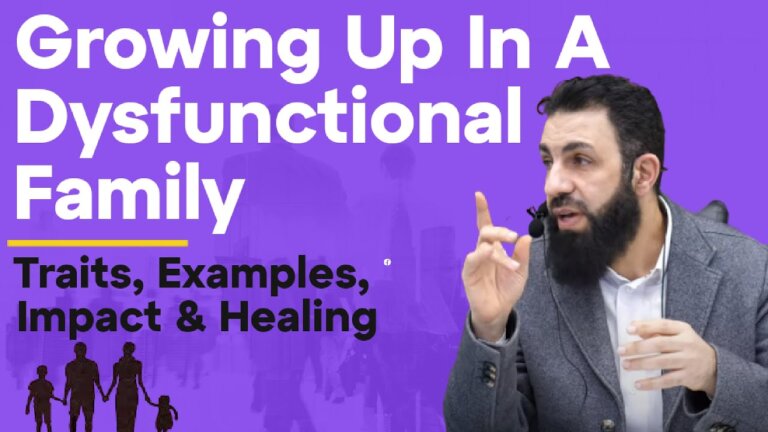
Sheikh Belal Assaad
The Quran and hadith describe family bonds as directly connected to a person’s relationship with Allah, not just a social nicety.
Substance abuse, constant conflict, violence, rigid authoritarianism, and emotional detachment are named as recognizable, harmful family patterns.
Sheikh Belal strongly warns against physical, verbal and emotional abuse, as well as using religion as a means of coercion or emotional pressure.
Sheikh Belal places strong emphasis on parental example, arguing that children learn a great deal by watching how their parents behave.
Sheikh Belal encourages parents, particularly with younger children, to introduce faith through warmth, conversation, play, and an emphasis on Allah’s mercy rather than making fear and punishment the child’s primary experience of religion.
Drawing on Prophetic teachings, Sheikh Belal strongly cautions parents against favoritism between children, including favoritism based on gender.
Sheikh Belal opens by establishing just how much theological weight the Quran and Sunnah place on family ties, referred to as Rahim, connected to the same root as Allah’s own mercy. He points to Quranic and hadith teachings to emphasize the spiritual importance of maintaining family ties, and refers to a Quranic account that he interprets as illustrating how the effects of righteousness can extend through later generations. Family dysfunction, he argues, can have effects that extend beyond the immediate conflict, affecting children’s emotional well-being, relationships, and later family life.
He names five recognizable patterns he associates with a dysfunctional family, worth holding up honestly against any household. The substance-abuse family, built around addiction. The conflict-driven family, defined by constant fighting, screaming, and blame over even small things. The violent family, marked by real physical harm and fear. The authoritarian family, all rules with no listening or warmth. And the emotionally detached family, often disguised as either relentless academic pressure or constant screen-based distraction, where genuine connection quietly goes missing in either direction.
From there, he moves into specific, practical guidance. Role modeling comes first: Sheikh Belal says even a one-year-old can be affected by hearing parents fight. Consistency in rules matters enormously. Sheikh Belal encourages parents, particularly with younger children, to introduce faith through warmth, conversation, play, and an emphasis on Allah’s mercy rather than making fear and punishment the child’s primary experience of religion. He is direct about equality between children regardless of gender, citing a hadith about a father publicly favoring his son over his daughter, and cautions against forcing older children’s personal preferences, food, clothing, minor choices, once there’s no real benefit beyond control itself.
He closes by naming the things most likely to genuinely cost a parent their relationship with a child: violence in any form, including verbal, emotional, and even religiously-framed pressure or emotional blackmail, inconsistent and poor role modeling, and simply not listening. He illustrates the alternative through the account of Anas ibn Malik, who served the Prophet Muhammad for nine years as a boy and never once heard him ask why he had done something, even after forgetting an important errand. Sheikh Belal pairs this with a small story of his own, his young daughter gently comforting him after he spilled milk and grew frustrated with himself, and closes with encouragement to let children make mistakes, get dirty, and build genuine resilience, rather than shielding them from every small discomfort along the way.
Family bonds, called Rahim in the Quran, share a root word with Allah’s own mercy. Hadith, Sheikh Belal says, describe family ties as connected directly to Allah’s throne, with a promise that connecting them draws you closer to Allah. He also points to a Quranic account that he interprets as illustrating how the effects of righteousness can extend through later generations. Sheikh Belal describes family dysfunction as having ripple effects across generations and connects severe family conflict with later emotional and relational difficulties in children. This reframes family ties as spiritually significant, not simply a nice-to-have social connection.
Reflect on one family tie you could strengthen this week, even with something small like a message or a visit.
The substance-abuse family is built around addiction, a leading cause of domestic conflict. The conflict-driven family is defined by constant fighting, screaming, and blame over even small things. The violent family involves real physical harm and a household marked by fear. The authoritarian family enforces rules with no listening or warmth in either direction. The emotionally detached family often disguises itself as either relentless academic pressure or constant screen-based distraction, both of which quietly crowd out real connection.
Honestly check your household against these five patterns, and consider which, if any, resonate.
Sheikh Belal strongly warns that violence in any form, physical, verbal, emotional, or religiously-framed pressure, can deeply damage a child’s trust. Inconsistent rules and poor role modeling, Sheikh Belal says, teach a child that what a parent says and does don’t match. Simply not listening, only lecturing, leaves a child feeling unheard and can lead to low self-esteem. The companion Anas ibn Malik served the Prophet Muhammad for nine years as a boy and never once heard him ask why he had done something, even after forgetting an important errand. That account illustrates an alternative: patient, ungrudging correction rather than blame.
Notice if your reaction to your child’s mistakes leans toward frustration or patience, and consider the Anas ibn Malik example.
Honestly reflect on whether the substance-abuse, conflict-driven, violent, authoritarian, or emotionally detached pattern resonates with your home.
Next time your child makes a mistake, pause and consider a patient response, rather than frustration or blame.
Look for opportunities to teach your younger child about Allah through mercy, gratitude, beauty, conversation, and positive experiences rather than relying primarily on fear.
Take stock of whether you treat your children equally, especially across gender, in everyday things like attention, money, and affection.
There are no right or wrong answers here, just space to think about your own family.
Which of the five dysfunctional family patterns, if any, do you recognize in your own household?
Can you recall a moment you reacted with frustration to your child’s mistake? How might a more patient response have gone instead?
How do you currently talk to your children about faith, more focused on fear and rules, or on mercy and beauty?
Are there ways, even small ones, that you treat your children unequally? What would it take to notice and correct that?
Every family is different. If you’ve tried something that made a difference in your family, we’d love to hear about it.
More reflections that may help you think about this from another angle.