
Reflection Summary
Dr. Daniel Amen
Dr. Amen, double board-certified psychiatrist and founder of Amen Clinics, known for brain SPECT imaging research on more than 250,000 patients across 155 countries.
Dr. Amen argues that many problems commonly described as mental-health conditions should be approached as brain-health problems, and that improving brain health can support mental well-being.
A 12-year-old failed by years of medication and therapy that blamed his mother — until Dr. Amen interpreted his SPECT scan as showing low activity in two specific brain regions and shifted his treatment accordingly; Dr. Amen reports that Chris improved substantially within weeks.
Love your brain. Avoid what hurts it. Build regular brain-healthy habits — food, exercise, sleep, and targeted supplements.
Dr. Amen cites figures suggesting that young people who spend more than three hours a day on social media have about twice the risk of anxiety and depression, while average use is around three and a half hours daily.
Dr. Amen’s own tool for teaching his daughter brain health since age two — a simple thumbs up, thumbs down game applied to everyday choices.
Chris was six when he was diagnosed with ADHD — hyperactive, impulsive, and prone to conflict. Medication made him worse. By eight, after attacking a boy at school, he was hospitalized, and a new doctor started him on an antidepressant that also made him worse. He was in weekly therapy for two years, and every week the therapist told his mother that if she dealt with her own childhood issues, Chris wouldn’t have a problem. Dr. Amen, who met Chris the night he was re-admitted to the hospital, asks the question this story turns on: what if the therapists were wrong? What if they were missing a brain in trouble?
Dr. Amen explains that his clinics use SPECT imaging to examine patterns of blood flow and activity as part of their approach to assessment and treatment. Dr. Amen says Chris’s SPECT scan showed patterns he interpreted as low activity in the left temporal lobe and prefrontal cortex. Based on that interpretation, he used a treatment approach that included supplements, dietary changes, and conversations about brain health; he reports that Chris improved substantially within weeks. Years later, he introduced Dr. Amen to five friends at his old high school. Dr. Amen’s point isn’t that parenting or therapy don’t matter; it’s that when a child is struggling, brain health deserves to be checked first, before shame settles on anyone.
From there, Dr. Amen lays out three brain-health strategies simple enough for young kids to grasp: love your brain, avoid what hurts it, and build regular brain-healthy habits. The “avoid” list includes head injuries, poor sleep, poor-quality food, and toxins like nicotine, alcohol, and marijuana — but also a less obvious one: digital addiction and excessive screen time. Dr. Amen argues that excessive screen use and digital addiction can negatively affect the brain’s reward systems, citing figures that 95% of young people use at least one social media platform and more than a third use it almost constantly. He cites figures suggesting that young people who spend more than three hours a day on social media have about twice the risk of anxiety and depression, while average use is around three and a half hours daily.
The habits side is refreshingly ordinary: a higher-protein, healthy-fat diet, coordination exercises like tennis or dance that stimulate the cerebellum, and consistent sleep. Dr. Amen says he recommends multivitamins, omega-3 fatty acids, and probiotics to his patients, and describes saffron as another supplement he personally uses and gives his children, citing research he believes supports benefits for mood, memory, and focus. To make brain health a natural, ongoing conversation rather than a lecture, Dr. Amen describes “Chloe’s Game,” which he’s played with his daughter since she was two: he names something — avocados, blueberries, hitting a soccer ball with your head — and she gives it a thumbs up or thumbs down for brain health.
What makes this talk useful for parents isn’t just the science — it’s the reframe. A struggling child is not automatically evidence of a failing parent. The broader takeaway for parents is to consider everyday foundations such as sleep, nutrition, movement, substance avoidance, and healthy technology habits while seeking appropriate professional evaluation when a child is genuinely struggling.
For years, Chris’s therapist told his mother that her own unresolved issues were the cause of his behavior. Dr. Amen says a SPECT scan showed patterns he interpreted as low activity in two specific brain regions. Dr. Amen reports that after shifting Chris’s treatment based on that interpretation, he improved substantially within weeks.
Before assuming a child’s struggle is purely a parenting or willpower problem, consider whether an underlying brain health issue needs to be checked first.
Dr. Amen argues that excessive screen use and digital addiction can negatively affect the brain’s reward systems. Tech platforms are built the way casinos are built — to keep kids craving more time on the app. Dr. Amen cites figures suggesting that more than three hours a day on social media roughly doubles the risk of anxiety and depression, with average use around 3.5 hours.
Delaying and actively supervising phones, social media, and gaming isn’t overprotective — Dr. Amen frames it as a brain-health decision.
Dr. Amen’s recommended foundation is simple: protein and healthy fats, coordination exercise, consistent sleep, and (with a doctor’s guidance) targeted supplements. Most of these are habits any family can start practicing this week, though the supplement piece is worth discussing with a child’s doctor first. His own family tool, ‘Chloe’s Game,’ turns brain health into a casual, ongoing conversation rather than a one-time lecture.
The habits that build a resilient brain are ordinary and repeatable — what matters most is doing them consistently as a family.
Borrow Chloe’s Game: name a food, activity, or habit and ask your child, is this good for your brain or bad for it? Keep it playful, not preachy.
Agree on a daily limit for social media and gaming, and explain the reason in brain-health terms rather than as a punishment.
Choose a movement activity your family enjoys — Dr. Amen particularly recommends coordination-based activities such as tennis, table tennis, or dancing.
Set and hold a consistent bedtime for your child’s age, since Dr. Amen names poor sleep as one of the clearest brain-health risks.
If you’re considering omega-3s, probiotics, or other supplements Dr. Amen mentions, discuss appropriate options and dosing with your child’s doctor first.
There are no right or wrong answers here, just space to think about your own family.
Have you ever blamed yourself, or felt blamed, for a child’s struggle that might have had a physical or brain-based root cause?
How much time does your child actually spend on screens and social media each day, compared with the level of use Dr. Amen associates with greater anxiety and depression risk?
What’s one brain-healthy habit — sleep, movement, or nutrition — your family could realistically strengthen this month?
How could you turn brain health into an ongoing, casual conversation with your kids rather than a one-time lecture?
Where might you need more information or professional support before making a decision about your child’s mental health?
Every family is different. If you’ve tried something that made a difference in your family, we’d love to hear about it.
More reflections that may help you think about this from another angle.
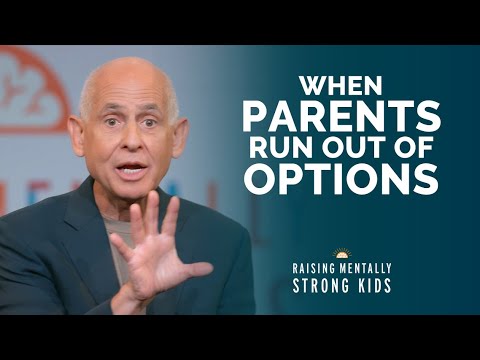
Dr. Daniel Amen
Sheikh Belal Assaad

Ustadha Hina Khan-Mukhtar & Ustadha Hosai Mojaddidi

Dr. Francesca