Reflection Summary
Parenting Hacks
The video notes that highly upset children may have difficulty listening and reasoning clearly, and recommends waiting for some calm before trying to teach or correct.
The video suggests that children praised mainly for being smart may become more afraid of failure, since a setback can start to feel like a judgment of their ability rather than just something to learn from.
The video encourages parents to pause before stepping in on manageable problems, so children have opportunities to generate options and experience themselves working through difficulty.
Building a rich emotional vocabulary is linked to better emotional regulation, not just better communication.
Seeing a parent get frustrated, calm down, and apologize models resilience directly.
The video presents a short bedtime check-in as a way to reinforce the sense that home remains a place where children can speak honestly and return after difficult experiences.
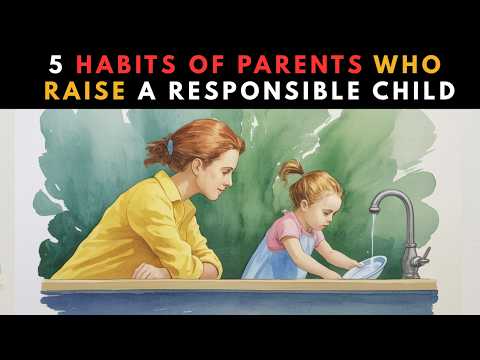
This video opens with the framing that the greatest gift a parent can offer isn’t a life free of problems, but a mind strong enough to face them, and argues that mental strength is built through small daily habits rather than one dramatic parenting moment. The first habit, staying calm before correcting, responds to the observation that highly upset children may have difficulty listening and reasoning clearly, so shouting or threats register as another threat rather than a teaching moment. The video recommends waiting for some calm before trying to teach or correct, with a suggested phrase along the lines of, let’s calm our bodies first, then solve the problem together. The second habit encourages parents to emphasize effort, strategy and progress rather than repeatedly praising intelligence, on the premise that children may become more willing to approach difficult tasks when struggle isn’t treated as evidence that they lack ability.
The next two habits involve letting children struggle safely. The video encourages parents to pause before solving manageable problems, tying shoes, or fixing disagreements for a child, asking what they think they could try first, so children have opportunities to generate options and experience themselves working through difficulty. Alongside this, normalizing healthy failure means shifting family language, asking what did you learn instead of did you win, and treating mistakes as something to learn from rather than evidence of not being good enough.
A middle cluster of habits centers on emotional life and modeling. Building emotional vocabulary daily, asking what a child felt rather than just what happened, is linked to better emotional regulation. Letting children witness a parent recover from their own mistakes, admitting frustration, taking a breath, apologizing, is presented as showing a child what resilience looks like in practice. Protecting a short daily window of undivided attention, phones away, following the child’s lead, reflects the idea that repeated moments of feeling heard, noticed and valued can strengthen emotional security and belonging. And replacing commands with curious questions, what was happening in your mind, rather than accusatory ones, invites reflection instead of simple compliance.
The final habits involve contribution and closure. Small daily responsibilities, framed as helping the family rather than helping the parent specifically, build a sense of belonging and capability rather than passivity. The last habit, closing each day with a short ritual, three simple questions about what made them smile, what was difficult, and whether anything is still weighing on them, followed by a brief, affirming sentence, is described as the most powerful of all, signaling to a child that home remains a safe place regardless of how the day went. The video closes by reiterating that mental strength is built in ordinary moments, breakfast conversations, car rides, apologies, not dramatic ones, and that a child needs a present, consistent parent far more than a perfect one.
The video notes that highly upset children may have difficulty listening and reasoning clearly, so shouting registers as a threat rather than a lesson. The video recommends waiting for some calm before trying to teach or correct. The video suggests that children praised mainly for being smart may become more afraid of difficult challenges, since a setback can start to feel like a judgment of their ability rather than just something to learn from. The video encourages praising effort and persistence instead, on the premise that children may become more willing to approach difficult tasks when struggle isn’t treated as evidence that they lack ability. Both habits shift a parent’s response away from immediate correction and toward building internal capacity.
Next time your child melts down, try saying, I can see you’re having a hard time, let’s calm our bodies first, instead of asking why they’re acting that way.
The video encourages parents to pause before solving manageable problems, tying shoes, or fixing disagreements for a child, asking what they think they could try first, so children have opportunities to generate options and experience themselves working through difficulty. Normalizing healthy failure means shifting family language, asking what did you learn instead of did you win. The video encourages treating mistakes as something to learn from, rather than evidence of not being good enough, to support healthy risk-taking. Families that celebrate learning over perfection tend to raise children willing to try difficult things.
Before rescuing your child from a small problem, pause and ask what they think they could try first.
Building emotional vocabulary daily, asking what a child felt rather than just what happened, is linked to better emotional regulation. Letting children witness a parent recover from their own mistakes, admitting frustration and apologizing, is presented as showing a child what resilience looks like in practice. A short daily window of undivided attention, phones away, following the child’s lead, reflects the idea that repeated moments of feeling heard, noticed and valued can strengthen emotional security and belonging. Ending each day with a short ritual, three simple questions followed by an affirming sentence, signals that home remains a safe place regardless of how the day went.
Try the three-question nightly ritual: what made you smile today, what was difficult, and is there anything still on your heart.
Next time your child melts down, try saying, I can see you’re having a hard time, let’s calm our bodies first, instead of asking why.
This week, catch yourself praising effort, you kept trying, instead of ability, you’re so smart, at least once a day.
Before solving a small problem for your child, pause and ask what they think they could try first.
End the day by asking what made them smile, what was difficult, and if anything is still on their heart, followed by a simple affirming sentence.
There are no right or wrong answers here, just space to think about your own family.
Do you tend to praise your child’s effort and process, or their intelligence and results, more often?
Where do you tend to jump in and rescue your child from a small problem they could work through themselves?
How comfortable are you letting your child see you make a mistake and recover from it?
What would a short, consistent nightly closing ritual look like in your household?
Every family is different. If you’ve tried something that made a difference in your family, we’d love to hear about it.
More reflections that may help you think about this from another angle.