Reflection Summary
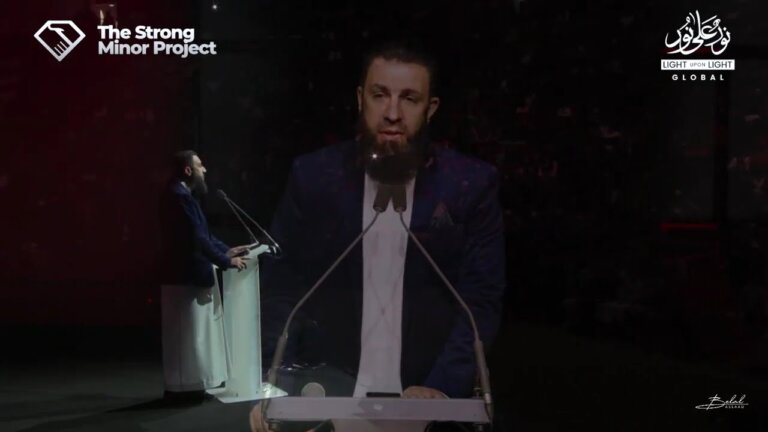
Sheikh Belal Assaad
Sheikh Belal Assaad describes marriage as an act of worship and points to the Quran’s description of it as a ‘firm covenant,’ emphasizing that spouses are accountable before Allah for how they treat one another.
Sheikh Belal presents formal rights and duties as a baseline to return to when conflict arises, while describing a healthy everyday marriage as something built through mercy, generosity, flexibility, and giving beyond the minimum owed.
In explaining the husband’s role in marriage, Sheikh Belal frames leadership and financial maintenance as added responsibility rather than personal superiority or unrestricted authority.
Sheikh Belal explains that a wife’s own wealth remains under her control and describes financial provision and appropriate housing as obligations placed on the husband. He also argues that living with in-laws is not something a wife can simply be compelled to do.
Sheikh Belal offers a three-circle model for thinking about marital privacy: an inner circle just for the couple, a middle circle for immediate family, and an outer circle for everyone else. He warns that repeatedly sharing private marital conflicts with relatives or publicly on social media can intensify conflict and damage trust within the marriage.
Sheikh Belal distinguishes between honoring parents and allowing them to direct decisions that belong to a married couple. He argues that decisions concerning the couple’s shared life should ultimately remain with the spouses themselves.
This is the final part of a three-part seerah-based series on building a “home sweet home,” turning to marriage and in-laws. It opens with a reframe: marriage in Islam is an act of worship and a “firm covenant” made under Allah’s name, not simply a romantic or practical arrangement. Sheikh Belal also argues that young Muslims face particular pressures around sexuality and delayed marriage, and urges parents to make conversations about relationships and marriage less taboo.
Sheikh Belal presents rights and duties as a fallback, not the foundation, of a marriage — something to return to only when there’s real conflict and no other way to resolve it. Day to day, he describes a healthy marriage as running on flexibility, mercy, and giving more than what’s strictly owed. Drawing on his teaching and counseling experience, he describes patterns he commonly sees in what husbands and wives value from one another, presented as general patterns rather than rules that apply identically to every marriage.
On rights specifically, Sheikh Belal distinguishes mutual rights (good treatment, safety, honesty, maintaining family ties) from the financial provisions he says a wife is owed (a dowry, day-to-day provision, appropriate housing, and full control of her own wealth) and the husband’s one extra degree of responsibility as leader, protector, and provider — paired immediately with his warning that this is a responsibility under Allah, not a license to control or dictate.
The closing section turns to in-laws. Sheikh Belal offers a three-circle model for thinking about marital privacy: an inner circle that belongs only to the couple, a middle circle shared with immediate family, and an outer circle for everyone else. He warns that repeatedly sharing private marital conflicts with relatives or publicly on social media can intensify conflict and damage trust within the marriage. He distinguishes between honoring parents and allowing them to direct decisions that belong to a married couple, arguing that decisions like where the couple lives or what they name their children should remain with the spouses themselves, and closes with a real story of a wife who defused her husband’s jealous mother not through confrontation, but through a small, deliberate routine of showing the mother attention first.
Sheikh Belal describes marriage as a ‘firm covenant’ entered into under Allah’s name, meaning both spouses are accountable to Him, not just to each other, for how they treat one another. Sheikh Belal argues that young Muslims face particular pressures around sexuality and delayed marriage, and calls on parents to have open, non-taboo conversations about marriage and relationships with their children. Sheikh Belal teaches that parents may advise their adult children about marriage but should not compel them to marry — or end a marriage — against their will. Sheikh Belal frames rights and duties as a fallback for real conflict, not the basis of a healthy marriage, which he says is meant to run on mercy, comfort, and flexibility instead.
If you have a teenager or young adult, look for one honest, non-judgmental conversation you could open about marriage and relationships this month, rather than leaving them to learn only from social media.
Drawing on his teaching and counseling experience, Sheikh Belal describes patterns he commonly sees in what a wife values from a husband — protection, being genuinely listened to, tender physical affection, reassurance that she’s secure, and consistent compliments and interest, even after the newness of a relationship fades — presented as general patterns rather than rules that apply identically to every marriage. In his experience, a husband commonly values respect for his role as provider and protector, his wife making an effort to look good for him specifically, appreciation for his effort, and his wife speaking well of him to her own family rather than airing complaints. Sheikh Belal frames the husband’s role as leader, protector, and maintainer as one added responsibility, not a superiority, paired in the Quran with the reminder that Allah is ‘Almighty,’ not the husband. Sheikh Belal presents a wife’s full financial autonomy — her own dowry, provision, independent housing, and unrestricted control of her own wealth — as an established right many Muslim couples still don’t realize applies.
Pick one thing from your spouse’s list this week, a genuine word of appreciation, a small tender gesture, real listening, and do it without waiting for a special occasion.
Sheikh Belal’s three-circle model draws a clear line: an inner circle for the couple’s privacy alone, a middle circle for immediate family, and an outer circle for everyone else. He warns that repeatedly sharing private marital conflicts with relatives or publicly on social media can intensify conflict and damage trust within the marriage. Sheikh Belal distinguishes between honoring parents and allowing them to direct decisions that belong to a married couple, arguing that decisions like where the couple lives or what they name their children should remain with the spouses themselves. Couples are advised to keep their own conflicts between themselves rather than reporting every disagreement to parents or siblings, since a conflict a couple resolves in days can leave a lasting negative impression on a parent who only hears about it once. A real story closes the video: a wife facing her husband’s jealous mother didn’t confront her — she built a small routine of the husband greeting his mother warmly first, which resolved the tension without anyone losing face.
Agree with your spouse this week on what belongs in your ‘inner circle,’ and name one thing currently being shared outside it that the two of you could bring back in.
Tell your spouse specifically what you appreciate about them this week, rather than assuming they already know.
Sit down with your spouse and agree on what stays between the two of you, then check whether that’s actually being kept private, including on social media.
For ordinary disagreements, consider trying to resolve the issue together before involving extended family. Serious harm, abuse, or safety concerns are different and may require outside support.
If a parent or in-law is pushing into a decision that belongs to you and your spouse alone, decide together how you’ll respond, kindly but firmly.
Find one small, low-cost way to show warmth to an in-law this week, a call, a visit, a kind word, without letting it cross into your marriage’s privacy.
There are no right or wrong answers here, just space to think about your own family.
Do I treat my marriage’s rights and duties as the baseline for conflict, or as the whole basis of the relationship day to day?
When did I last tell my spouse specifically what I appreciate about them, rather than assuming they know?
Is there anything about our marriage currently being shared with parents, siblings, or social media that should really stay in our ‘inner circle’?
Have I ever let a decision that belonged to my spouse and me alone be made or overridden by a parent or in-law?
If my child came to me wanting to talk about marriage or relationships, would they feel safe bringing it up, or would I shut the conversation down?
Every family is different. If you’ve tried something that made a difference in your family, we’d love to hear about it.
More reflections that may help you think about this from another angle.