Reflection Summary
Sophia
The video presents emotion labeling — putting a child’s experience into simple words — as a way of helping the child feel understood and begin developing emotional vocabulary.
The video encourages parents to communicate that difficult feelings are acceptable, so children do not feel they need to hide them out of shame.
Saying it’s okay to be angry, it’s not okay to hit teaches a child that having big feelings doesn’t make them a bad person.
I wonder if you’re feeling invites a child to check the guess against their own experience, rather than simply being told what they feel.
Rather than immediately correcting, reassuring, or dismissing what a child says, ‘Tell me more about that’ communicates curiosity and gives the child room to explain further.
The video treats saying I love you in the middle of a meltdown, rather than as a reward for calming down, as a way of showing a child they’re loved for who they are.
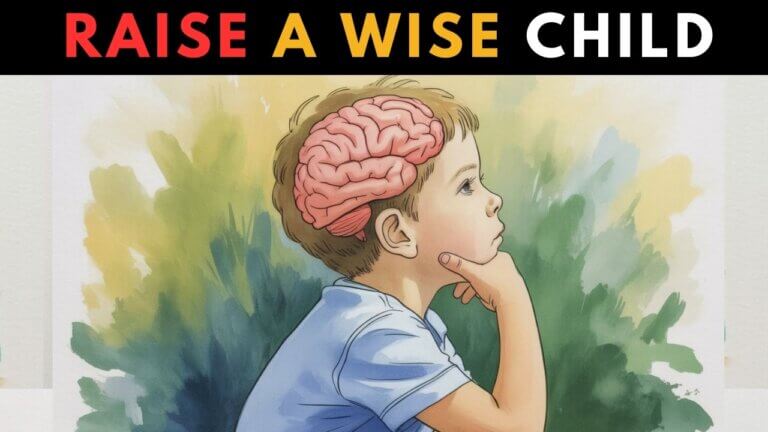
Sophia from Family Mind Decoded argues that a young child’s brain, still years away from a fully developed prefrontal cortex, doesn’t yet have the architecture to make sense of emotions independently. A parent’s repeated, specific language becomes the scaffolding a child’s own inner voice eventually builds itself around. The first phrase is naming a feeling out loud before trying to fix it, I can see you’re feeling really upset right now, which the video presents as a way of helping a child feel understood and begin developing emotional vocabulary, since the child no longer feels alone inside the feeling. The second is offering permission without shame, it’s okay to feel that way; the video argues that responding without shame may make children more willing to express difficult emotions rather than hide them.
Two more phrases build body awareness and a crucial distinction. Asking what does that feel like in your body, tummy tight, chest hot, gives a child another way to notice and describe their emotional experience, rather than only a verbal one. And it’s okay to be angry, it’s not okay to hit teaches something many parents accidentally collapse together, that a feeling and a behavior are two separate things. Validating the emotion completely while still drawing a clear boundary around the action teaches a child that having big feelings doesn’t make them a bad person.
Several phrases center on invitation rather than diagnosis. I wonder if you’re feeling… offers an emotion as a gentle guess a child can check against their own experience, rather than a label imposed on them, turning emotional identification into something active rather than passive. You can feel sad and still be okay gives a child a longer view that exists outside a difficult feeling, teaching what’s sometimes called emotional tolerance, that a wave of sadness or fear will move through and pass rather than staying permanently overwhelming. And tell me more about that, offered instead of an immediate reassurance or dismissal, communicates curiosity and gives a child room to explain further, teaching that sharing something hard leads to being understood more deeply rather than corrected or overridden.
The closing phrases address shame and unconditional love directly. It’s okay to need help communicates that asking for support is acceptable rather than something to be ashamed of. The video suggests that saying I’m not mad at you, I’m just having a big feeling can help relieve a child of the misplaced responsibility young children sometimes feel for a parent’s stress, while modeling that adults have big feelings too and can name and own them rather than suppress them. And the phrase treated as most foundational of all, I love you even when you’re having a hard time, said during a meltdown rather than as a reward for calming down, teaches a child that their worth was never tied to their behavior or emotional state in the first place, a foundation the video argues everything else in emotional intelligence actually grows from.
The video presents naming a feeling out loud, I can see you’re feeling really upset right now, as a way of helping a child feel understood and begin developing emotional vocabulary. This works because the child no longer feels alone inside the feeling, not because the underlying problem has been solved. The video encourages offering permission without shame, it’s okay to feel that way, so children do not feel they need to hide their emotions out of shame. Both phrases work by putting connection before correction in the moment a feeling first appears.
Next time your child is upset, name the feeling out loud before trying to fix or distract them.
Asking where a feeling shows up in the body gives a child another way to notice and describe their emotional experience. It’s okay to be angry, it’s not okay to hit validates an emotion completely while still drawing a clear boundary around the behavior. This teaches a child that having big feelings doesn’t make them a bad person, only certain actions cross a line. Hearing the feeling and the behavior addressed separately helps a child understand that the two can be treated separately. This distinction is described as one of the core building blocks of genuine emotional intelligence.
Practice separating feeling from behavior: it’s okay to be angry, it’s not okay to hit.
I wonder if you’re feeling offers an emotion as a gentle guess a child can check against their own experience, rather than a label imposed on them. You can feel sad and still be okay teaches a child that a difficult feeling will pass, rather than staying permanently overwhelming. Tell me more about that teaches a child that sharing something hard leads to being understood more deeply, not immediately fixed or overridden. The video suggests that saying I’m not mad at you, I’m just having a big feeling can help relieve a child of misplaced responsibility for a parent’s own stress. The video treats I love you even when you’re having a hard time, said during difficulty rather than after it resolves, as a way of showing a child their worth isn’t conditional.
Say I love you to your child in the middle of a hard moment today, not just after they’ve calmed down.
Next time your child is upset, name the feeling out loud before trying to fix or distract them.
Practice the phrase it’s okay to be angry, it’s not okay to hit the next time a strong feeling turns into an unwanted action.
Next time your child shares something emotional, resist reassuring or dismissing right away, say tell me more about that instead.
Tell your child I love you in the middle of a hard moment today, not just after they’ve calmed down.
There are no right or wrong answers here, just space to think about your own family.
What’s your instinct when your child is upset, to fix it quickly or to name the feeling first?
Do you tend to collapse the feeling and the behavior together, or keep them separate in how you talk to your child?
How does your child currently respond when they share something difficult with you? Do they keep sharing, or have they started holding back?
When was the last time you said I love you to your child specifically during a hard moment, rather than after it passed?
Every family is different. If you’ve tried something that made a difference in your family, we’d love to hear about it.
More reflections that may help you think about this from another angle.