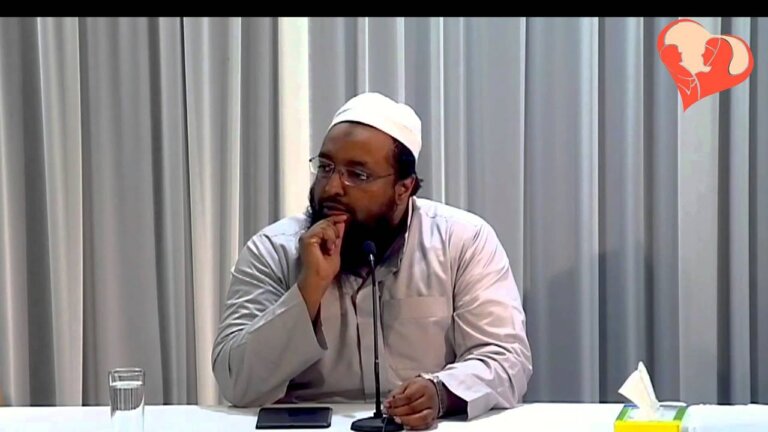
Reflection Summary
Imam Tom Facchine
Imam Tom argues that many digital platforms deliberately use design features intended to keep people engaged, making the struggle with attention bigger than individual willpower alone.
Imam Tom traces today’s attention economy back to earlier advertising-driven media, using the 19th-century newspaper The Sun and its sensational “Great Moon Hoax” as an example.
Drawing on critiques of surveillance capitalism, Imam Tom describes how platforms turn behavioral data into predictions that can be commercially valuable.
Imam Tom argues that habits of fragmented attention can make sustained reflection, reading, prayer, and presence with Allah more difficult.
Small, consistent choices to be fully present, modeled after the Prophet Muhammad’s example, can rebuild the capacity for depth and connection.
Imam Tom opens by pointing to reports that several prominent technology leaders placed significant limits on their own children’s screen use. That contrast is his starting point. He argues that these platforms are deliberately designed to be engaging, pointing to features such as variable rewards, infinite scroll, autoplay, and notifications that are meant to keep attention captured. Understanding that design, he suggests, matters more than simply trying to muster more willpower against it.
He traces this further back than most people expect, to the 19th-century newspaper The Sun and its sensational “Great Moon Hoax,” which he uses as an example of attention being captured first and profited from second. Imam Tom describes today’s platforms as refining and automating that basic model. Drawing on critiques of surveillance capitalism and Yanis Varoufakis’s idea of “technofeudalism,” he describes a digital environment in which attention and behavioral data have become extraordinarily valuable resources. The full talk also ranges into media ownership, surveillance, and politics; this reflection focuses on the parts most relevant to attention, family, and faith.
The part of his talk most relevant to families is what he says this costs spiritually. Imam Tom argues that a mind repeatedly trained to jump from clip to clip can lose some of its capacity to sit still, reflect, or be fully present, including in worship. He connects this directly to sincerity in prayer and closeness to Allah, framing wasted attention as a kind of quiet theft from a person’s inner life. His answer is not withdrawal from the world but deliberate presence, following the example of the Prophet Muhammad ﷺ, whose attention to whoever was in front of him was complete. Small, consistent choices to be fully present, he suggests, are how that capacity gets rebuilt.
Imam Tom points to reports that several prominent technology leaders limit their own children’s screen use, and treats this as a telling sign about how these products are designed. He traces the underlying model back to the 19th-century newspaper The Sun and its “Great Moon Hoax,” an example he uses of sensational content winning attention. Drawing on critiques of surveillance capitalism, he describes platforms turning behavioral data into predictions that can be commercially valuable. He draws on Yanis Varoufakis’s idea of “technofeudalism” to describe attention as a resource being extracted for profit. Seeing the business model behind the scroll, he argues, reframes the problem as bigger than personal discipline alone.
Consider that, in Imam Tom’s framing, the pull you feel toward a screen is partly by design, not just a personal willpower failure.
Imam Tom warns that repeatedly training attention on short, fast-moving content can make sustained attention more difficult. He connects this directly to worship, arguing that sincerity and presence in prayer require sustained attention, which constant scrolling can erode. He frames wasted time on screens as a quiet theft from a person’s inner and spiritual life, not just a productivity issue. Restoring that capacity, he says, takes deliberate and repeated effort rather than a single decision.
Notice whether constant screen use is affecting your own ability to sit still, reflect, or pray with focus.
Imam Tom points to the example of the Prophet Muhammad, whose attention to whoever was in front of him was complete and undivided. He suggests this kind of full presence is itself a spiritual practice, not separate from worship but a part of it. Practically, he encourages asking simple questions before reaching for a screen, why you are engaging with it, what you are looking for, and whether you would do the same thing in private. Those questions build the kind of self-awareness that makes intentional, rather than automatic, screen use possible. Small, consistent choices to be present, he argues, are how the capacity for depth and connection gets rebuilt over time.
Before picking up your phone out of habit, pause and ask yourself why, and whether you would do the same thing in private.
Next time you notice yourself or your child pulled back to a screen, consider talking about the idea, which Imam Tom raises, that apps are designed to hold attention, rather than framing it only as a willpower problem.
Set aside a short, regular window, even five or ten minutes, for quiet reflection or prayer without any screens nearby.
Before opening an app out of habit, pause and ask why you are reaching for it, what you are hoping to find, and whether you would do the same thing in private.
When your child is talking to you, practice giving them your complete attention, phone down, as a small, visible example of what presence looks like.
It’s easy to think about our children’s screen habits before thinking about our own. But attention is part of what we give our families. Every glance at a notification, every half-listened conversation, and every moment spent physically present but mentally elsewhere can quietly shape the atmosphere of a home.
Imam Tom’s reflection invites a question that reaches beyond screen-time rules: what is receiving the best of my attention? Reclaiming some of that attention—for our children, for quiet, and for Allah—may be one way of becoming more present in the relationships and responsibilities already in front of us.
There are no right or wrong answers here, just space to think about your own family.
How aware are you of the specific ways social media and technology are designed to shape your attention and daily habits?
Where in your week could you create an intentional, unplugged space to reflect or reconnect with your faith?
How do you think constant screen distraction is affecting your family’s emotional or spiritual life right now?
What would it look like for you to model full, undivided presence for your children this week?
Every family is different. If you’ve tried something that made a difference in your family, we’d love to hear about it.
More reflections that may help you think about this from another angle.